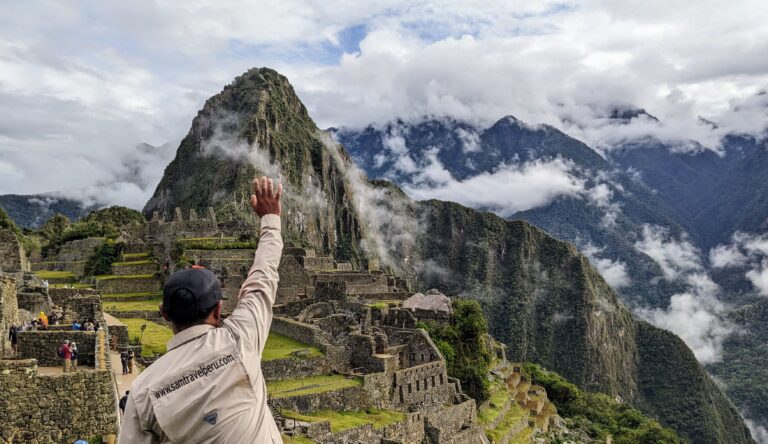




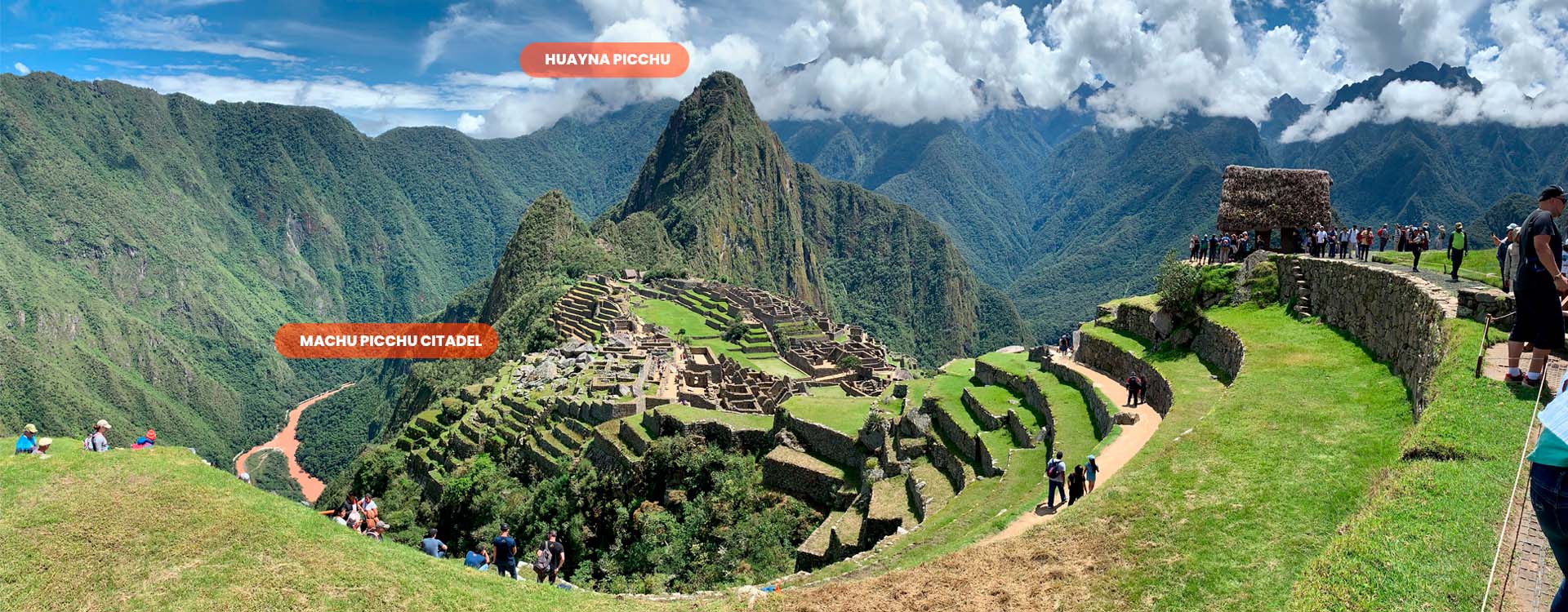
Huayna Picchu (also spelled Wayna Picchu), which translates from Quechua as “Young Mountain,” rises to 2,693 m (8,835 ft) directly behind the citadel of Machu Picchu in the Andes. Because of its iconic ridgeline and unrivalled views, it remains the most popular short hike in the sanctuary. Tickets are strictly limited, so we recommend booking several months in advance to secure your preferred date.
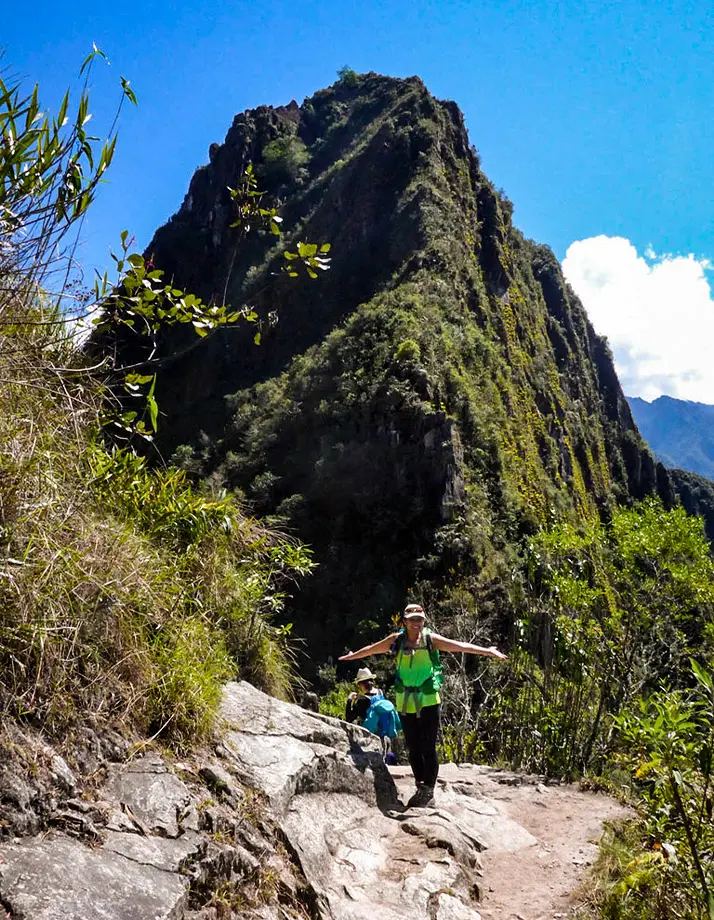
The round-trip trek covers roughly 4 km (2.5 miles) through humid Andean cloud forest. After the initial climb through lush vegetation, you reach the famous Stairs of Death, a steep, narrow flight of original Inca steps. The section looks dramatic but is not inherently dangerous when taken slowly. Handrails and fixed ropes are in place at the most exposed points.
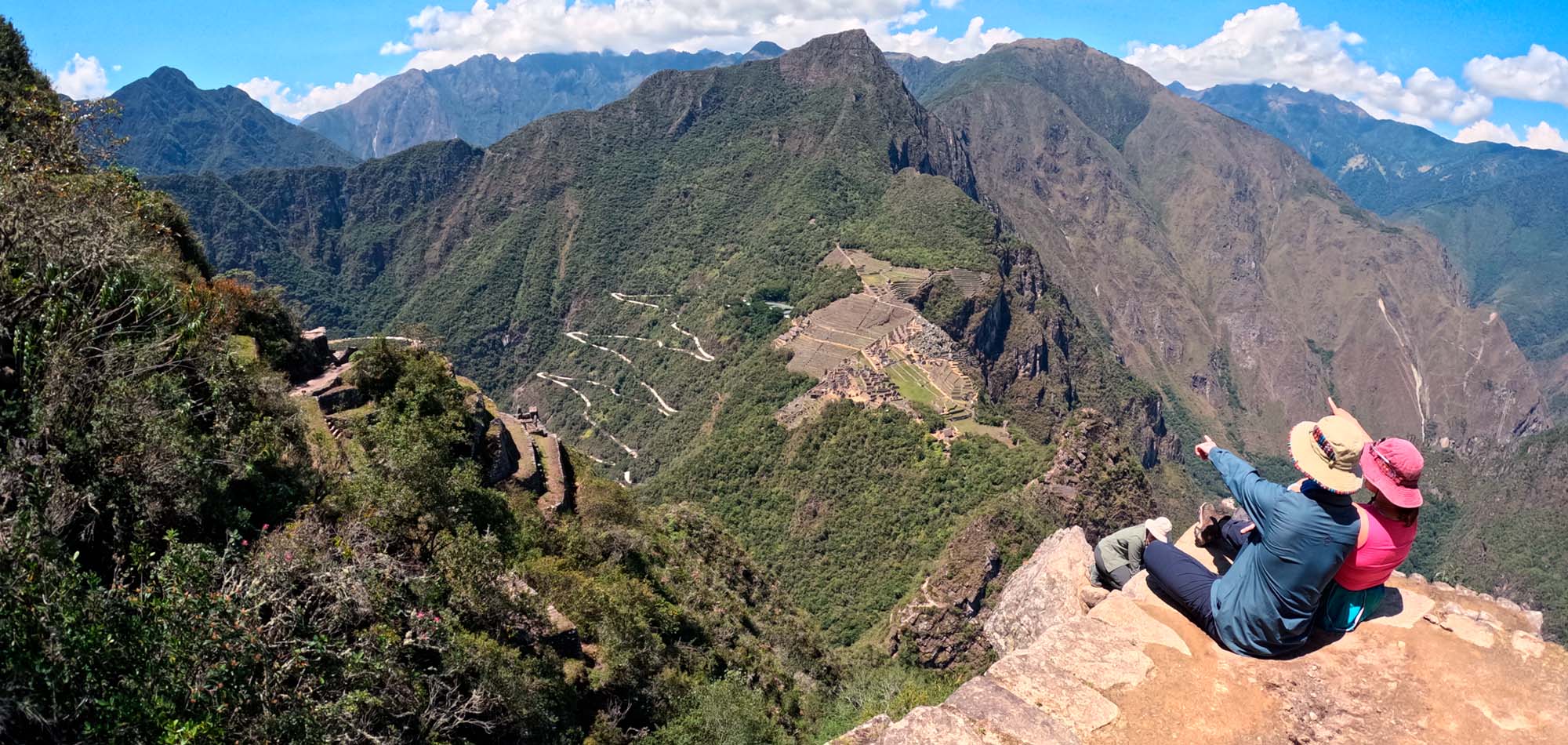
From the summit, you are rewarded with a spectacular bird’s-eye view of Machu Picchu, with the Urubamba River meandering through the valley far below, framed by emerald peaks and Inca terraces. To keep the trail flowing for everyone, please limit your time on the small summit platform.
How long to climb Huayna Picchu
Climbing Huayna Picchu is short, steep, and unforgettable, not an all-day expedition. Most hikers will reach the 2,693-meter summit in 1.5 to 2 hours via the classic Short Trail (about 2 km of Inca stone stairs), then need another 45 minutes to an hour to descend, so plan for roughly 2 to 3 hours round-trip.
Your exact time depends on fitness, how busy the narrow steps are, weather, and how long you linger at the top, plus whether you’ve spent a couple of days acclimatizing in Cusco first.
Please note:
Important: A Huayna Picchu ticket includes Circuit 3 only (the lower citadel). It does NOT include the classic postcard photo from the upper terraces Circuit 1 or the full Circuit 2 route. If you want both the summit and the classic photo, you must buy two separate tickets.
This is not Machu Picchu Mountain. Huayna Picchu is shorter, steeper, and more exposed, with the iconic view directly behind the ruins. Machu Picchu Mountain is taller, wider, and less crowded
The ascent follows steep, original stone steps that can be slick in rain. Wear sturdy hiking boots with deep tread before attempting the climb.
This hike is not suitable for everyone. Consider your fitness, balance, and comfort with heights before purchasing a ticket. It becomes significantly more challenging during the wet season (November to April).
A guide is not included with the standard ticket, but park staff are stationed at key points for safety. If you want a private guide on Huayna Picchu, you must reserve in advance and expect an additional fee.
Arrive punctually for your assigned entry window. Late arrivals are not permitted to start the hike and will forfeit the ticket.
How many tickets are available?
UPDATE 2025 to 2026: Huayna Picchu now operates on Circuit 3-A with a daily capacity of 350 hikers (previously 200 to 400 depending on season), split across two entry groups: 07:00 and 09:00. Because demand far exceeds supply, book 2 to 3 months ahead in the dry season (May to September), and at least 4 to 6 weeks ahead in shoulder months.
Peak season (dry season): May to September.
- Best weather, clearest skies, most reliable views from the summit.
- Highest demand, tickets sell out fastest, prices for hotels and trains are highest.
- This is when you need to book Huayna Picchu 2 to 3 months ahead.
Low season (rainy season): November to March.
- Frequent rain, muddy steps, more cloud cover on the summit.
- Fewest crowds, easiest to get last minute tickets, lowest prices.
- February the Inca Trail closes, but Huayna Picchu stays open.
Shoulder months: April and October, plus early November.
- April is the end of the rains. The landscape is very green, waterfalls are full, and crowds have not yet arrived for May.
- October is the end of the dry period. Weather is still mostly good, but you start to get afternoon showers.
- Both months give you about 70 percent of the good weather with about 50 percent of the crowds.
Cost
Official Ministry of Culture price: S/ 200 for foreign adults (about US $55), S/ 118 for children 3 to 17, S/ 125 for university students under 25. Most agencies bundle the ticket with service fees, so you will commonly see US $70 to US $75 per person advertised.
Reasons to hike Huayna Picchu
- The iconic view, from above. You stand directly over the citadel with the Urubamba River bending through the valley below. It is the photo everyone recognizes, taken from the place few people reach.
- The satisfaction of a true summit. It is a steep, focused ascent, and reaching the top feels like a proper achievement inside a World Wonder.
- Make a once in a lifetime visit count. Most travelers come to Machu Picchu only once. The summit adds a perspective you cannot get on a standard ticket.
- Better photos, fewer people in frame. When the early morning mist usually lifts, the upper viewpoint gives you clean, wide shots without the crowds on the lower terraces.
Is it possible visit Machu Picchu and hike Huayna Picchu on the same day?
Yes, but you will need two separate tickets.
In the past, you could buy a single ticket, wander around the main ruins (the lower citadel) early in the morning, and then simply walk over to the checkpoint to climb Huayna Picchu mountain at 10:00 AM.
Under the new circuit system, that is strictly illegal. Here is why:
- One Ticket = One Strict Direction: The trails inside Machu Picchu are now strictly one-way loops. You cannot backtrack.
- The Huayna Picchu Rule: The peak of Huayna Picchu is officially accessed via Circuit 3-A. If you enter the park on this permit, you must walk directly to the mountain checkpoint at the back of the citadel. You are not allowed to explore the upper terraces or the main ruins beforehand on this ticket.
- The Exit Penalty: If you try to tour the main citadel from 8:00 to 9:00 AM first, the one-way paths will force you right out the main exit gates of the park. You won’t be able to get back inside to reach the mountain checkpoint for your 10:00 AM climb.
To do both a comprehensive tour of the ruins and climb the mountain on the same day, visitors now have to purchase two separate tickets and physically exit and re-enter the park.
Route & Timeline
Here is a realistic visual timeline showing how a same-day visit actually works under the new rules. It requires an early mountain climb, an exit for a break/lunch, and a re-entry for the main citadel tour.
- First Entry – Huayna Picchu (07:00 AM – 07:30 AM Entry Window): Enter the main gates using your Circuit 3-A (Huayna Picchu) ticket. You have a strict 30-minute grace period to pass the main gate. Walk directly to the mountain checkpoint without stopping to tour the ruins.
- The Mountain Climb ~07:30 AM – ~10:30 AM. Check in at the trailhead. Hike up to the summit, enjoy the views, and carefully hike back down.
- Mandatory Exit & Rest ~10:30 AM – ~12:30 PM. Follow the one-way exit trail completely out of the archaeological site. Use the restrooms, grab lunch at the cafe, and rest your legs.
- Second Entry – Citadel Tour ~12:30 PM – 03:00 PM. Re-enter the main gates using your second ticket (Circuit 1 or 2). This is when you finally do your classic, guided tour of the main iconic terraces and stone ruins.
Things to know
- Summit elevation 2,693 m (8,835 ft), about 260 m above the Machu Picchu plaza.
- Total distance about 4 km (2.5 miles) round trip
- Minimum age 12 years. Hikers under 18 must be with an adult.
- If you are traveling in June, July or August, we recommend securing tickets before you book flights.
- Located directly north of the Machu Picchu citadel.
- Trail includes steep Inca steps, narrow ledges, and fixed ropes. There are no bridges.
- Daily limit 350 tickets (2025 to 2026), split into 07:00 and 09:00 entry groups.
- Typically 2 to 3 hours round trip for the summit.
What to see in Huayna Picchu Mountain?
Terraces with flying stairs and houses.
Near the summit you pass restored Inca dwellings and the “flying stairs”. The steps protrude out from the terrace walls to connect levels. There is a gap between some steps, so you need to step carefully rather than jump.
Tunnels in the Huayna Picchu Mountain
Just below the summit you pass through a low, narrow tunnel. You will need to crouch to get through. Historians believe the tunnel created a defensive choke point against invaders approaching the upper shrines.
Special fauna
Vizcachas live among the rocks, and many birds and lizards inhabit the cloud forest. If you are lucky, you may see the elusive spectacled bear or the Andean cock-of-the-rock.
What to bring to Huayna Picchu Mountain?
- Your Huayna Picchu ticket and original passport.
- Sturdy hiking boots with deep tread.
- Light rain jacket or poncho.
- Small daypack, maximum 40 by 35 by 20 cm.
- Long-sleeve shirt and lightweight trousers for sun and insect protection.
- Sunscreen SPF 50 plus, hat, and sunglasses.
- Light food / High-energy snacks.
- Camera or phone in a dry bag.
- Insect repellent.
- 1.5 to 2 liters of water. There are no refill points on the trail.
- Poles are generally not permitted inside Machu Picchu unless you have a medical certificate. If allowed, rubber tips are mandatory.