



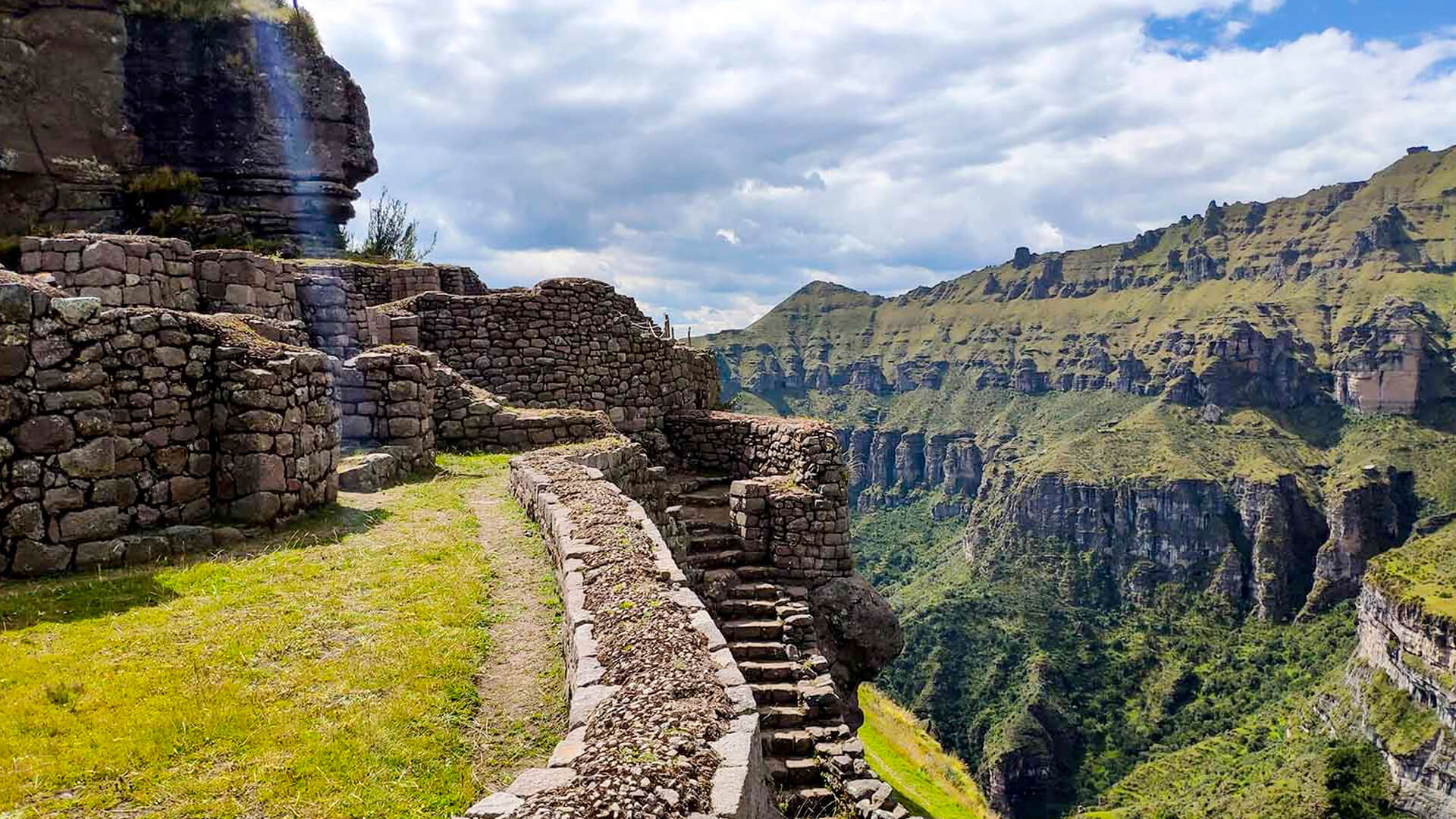
Cusco has many great attractions for which people come from all over the world, but Cusco also has some great hidden gems waiting to be discoved.
The Mystical & Eerie Hidden Ruins
Q’enqo Chico
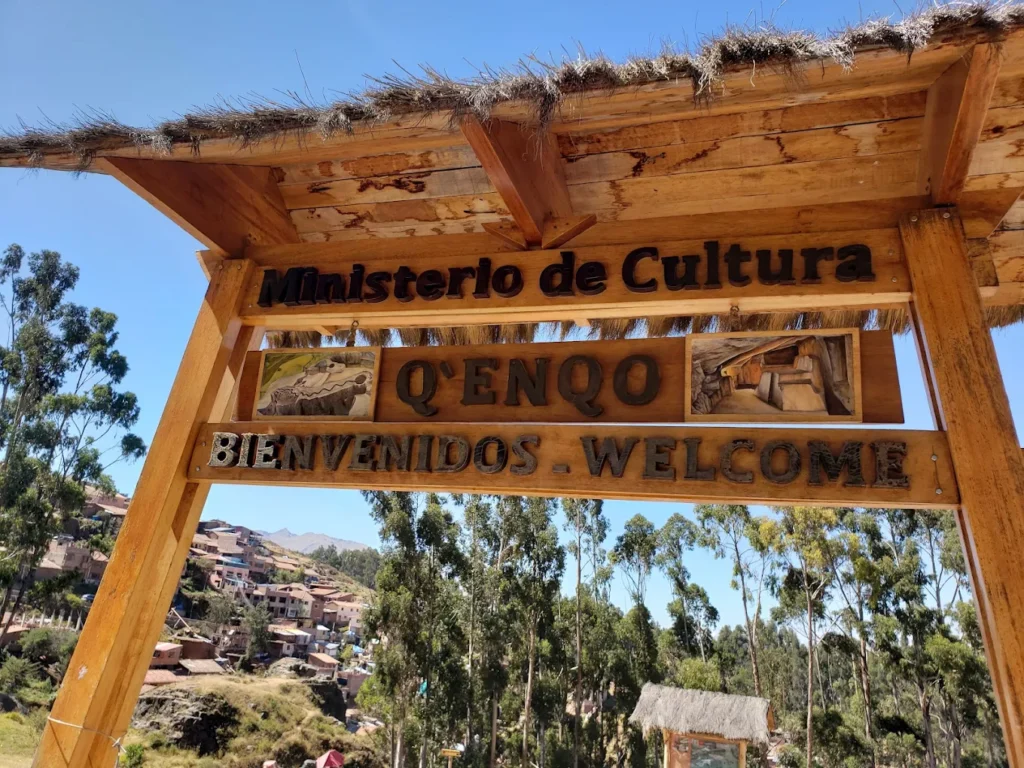
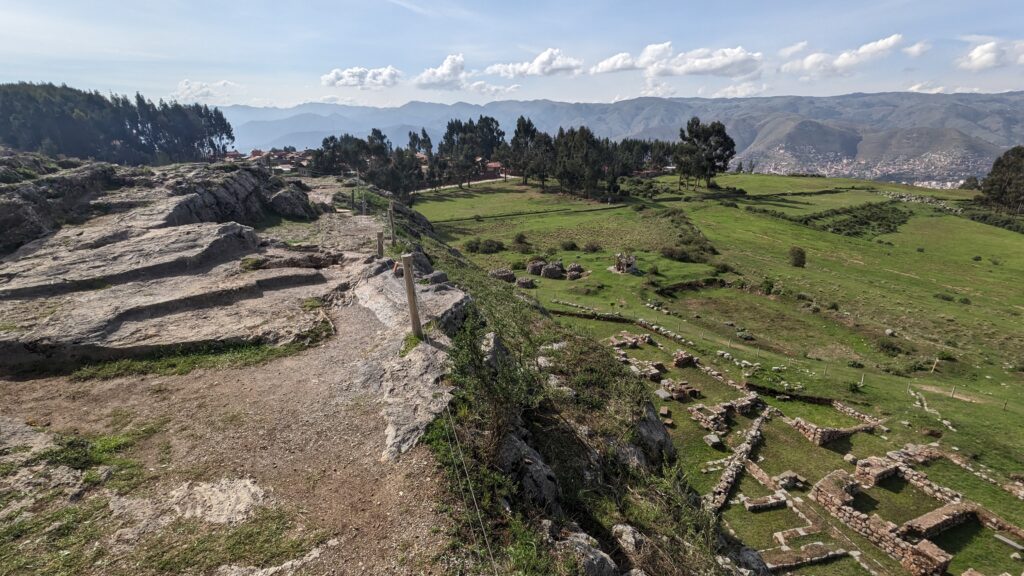
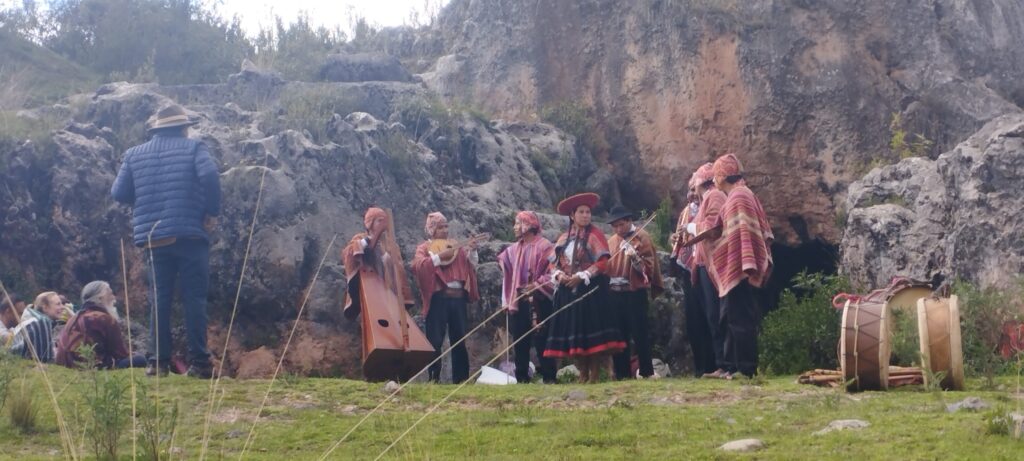
While the crowds line up with pre-purchased tickets to see the massive limestone caverns of Q’enqo Grande, few realize that its wilder, completely free sibling sits just a short walk down a dirt trail. Tucked away on the edge of a quiet eucalyptus forest, Q’enqo Chico remains entirely unmapped and unrestricted. Here, you can run your hands along beautifully carved stone seats, explore shallow rock basins, and stand before an ancient ceremonial platform. Because it sees almost no tourist foot traffic, it has a wonderfully quiet, slightly haunting atmosphere where locals still go to reflect or leave quiet offerings of coca leaves away from the city noise.
Temple of the Moon (Templo de la Luna)
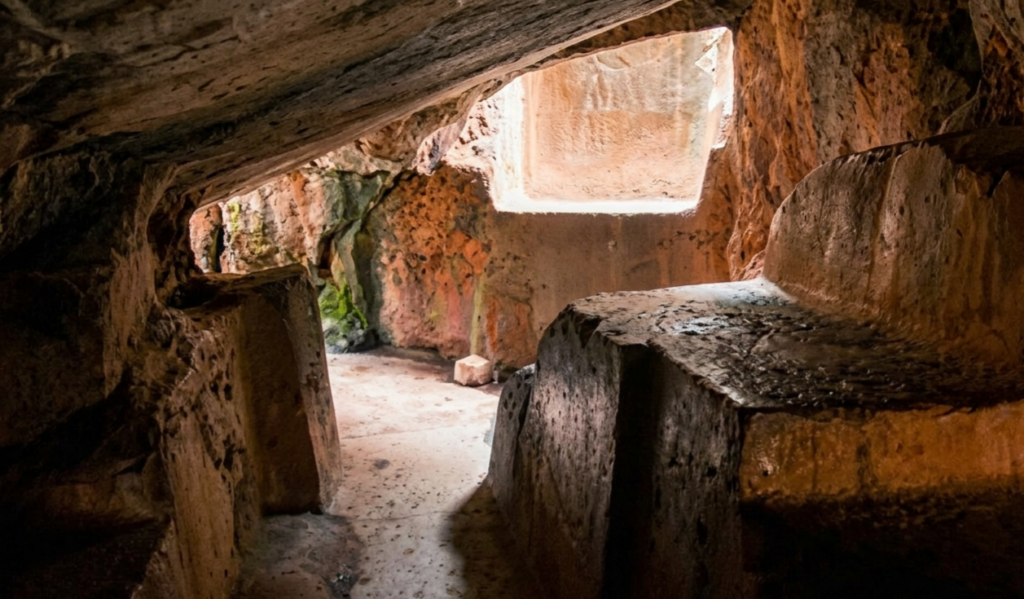
Perched on the hills above San Blas, the Temple of the Moon is a prominent, hill-carved shrine that served as a major center for fertility rituals and lunar worship during the Inca Empire. The exterior looks like a wild rock formation, but entering the hidden cave reveals a perfectly smooth stone altar. The magic of this site lies in its celestial engineering: a single, deliberate crack in the rock ceiling allows moonlight to strike the altar precisely during specific lunar alignments. It is a powerful example of how the Incas blended natural topography with astronomical precision.
Kusilluchayoc (The Temple of the Monkeys)
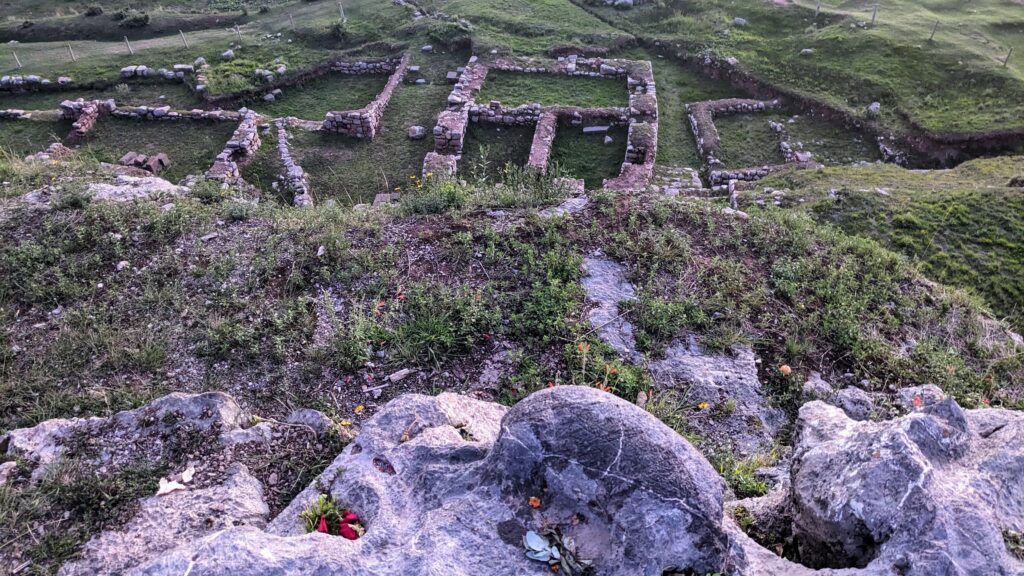
An easy walk from the standard ruins brings you to Kusilluchayoc, an ancient huaca (sacred rock) that translates directly to the Temple of the Monkeys. Incan artists intricately carved relief images of monkeys and serpents directly into a single, massive boulder here. During the Spanish campaigns to eliminate indigenous religious practices, many of these animal carvings were chiseled away, but their distinct silhouettes remain clearly visible in the stone. The highlight of the site is a narrow, dark crevice slicing right through the center of the giant structure that visitors can physically slide through to experience the cold heart of the rock.
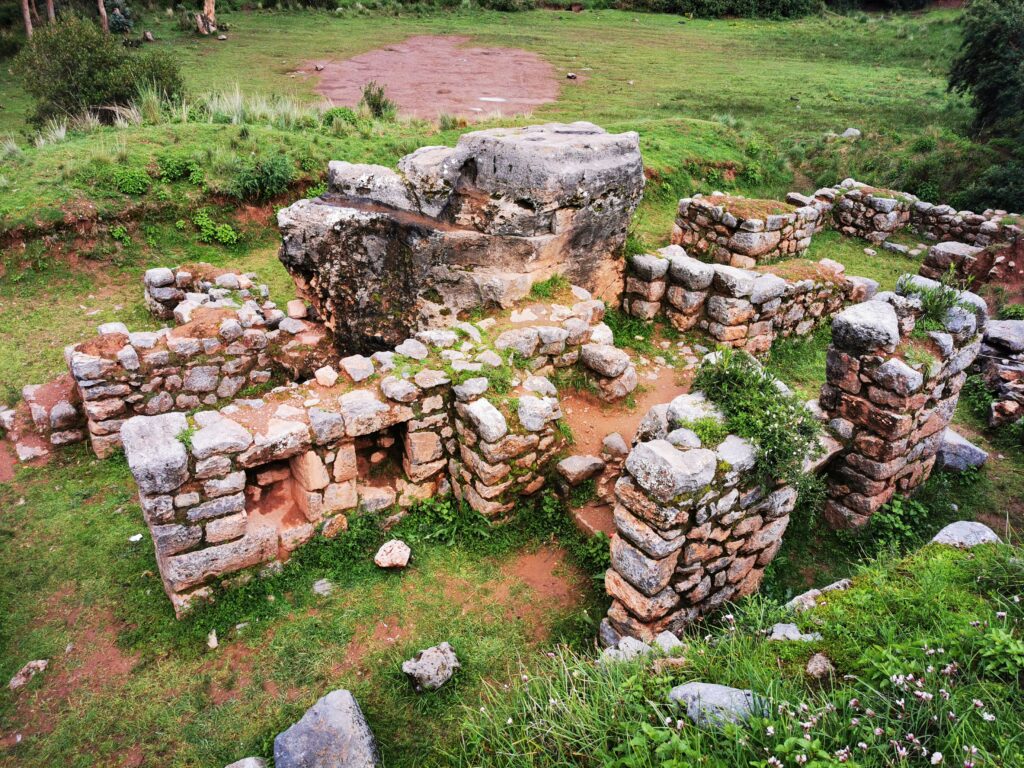
- How to get there: Take a local taxi and head for Señor de Huanca from Clorinda Matto de Turner market, and ask to drop off at the Q’enqo entrance. It is a 10-minute walk into the forest trail from there.
- Cost: Completely Free (No Boleto Turístico required).
- Best time to visit: Between 9:00 AM and 2:00 PM for the best natural light inside the rock crevice.
Streets, Stones & Hidden Architecture
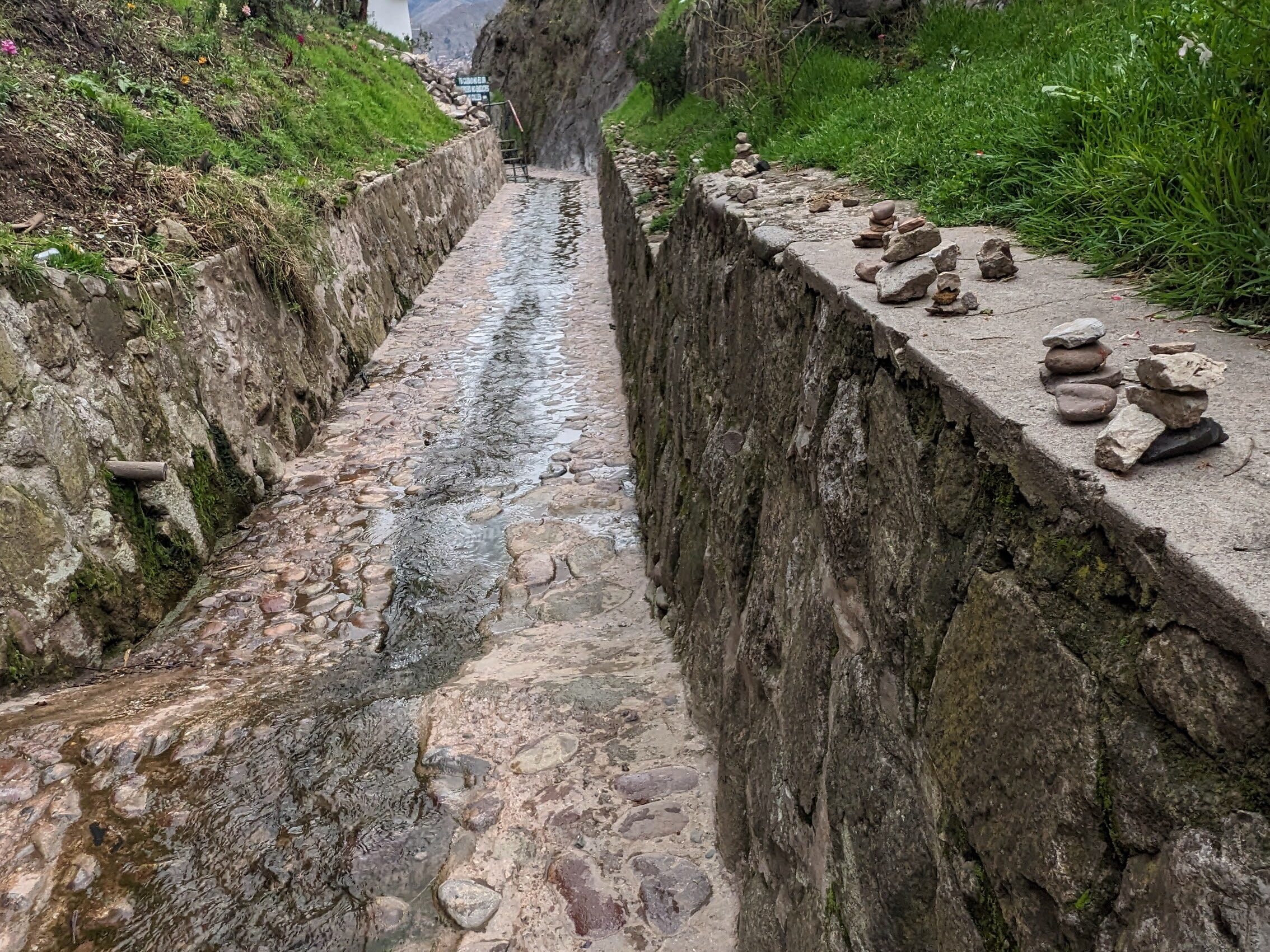
Sapantiana Aqueduct & Huaca
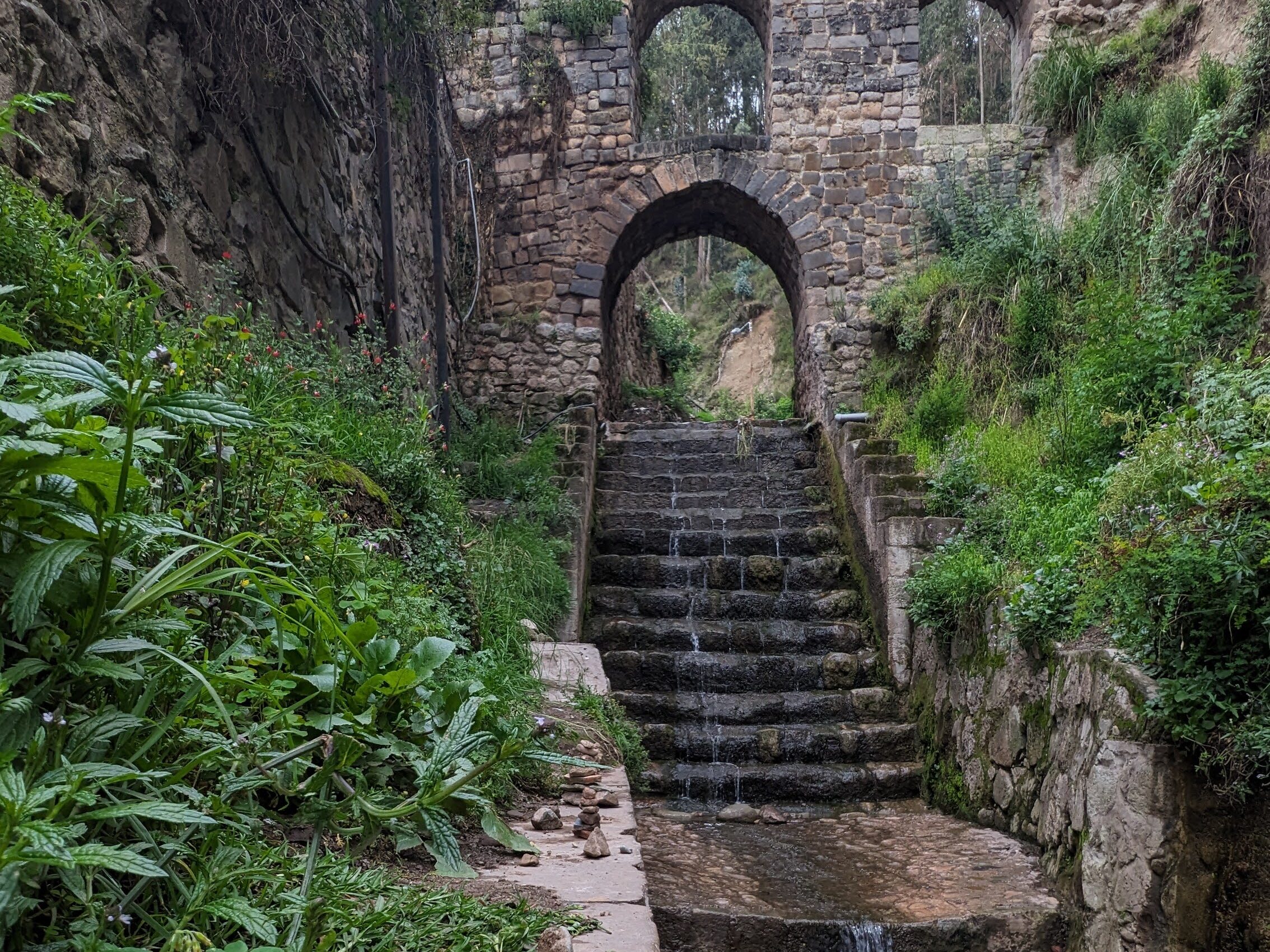
Nestled inside a ravine at the end of a quiet walking trail starting right from the top of San Blas, this stunning colonial aqueduct looks like a piece of ancient Rome dropped into an Andean forest. The massive arched stone structure was actually built by colonial clergy using stone blocks reclaimed from ruined Incan palaces nearby. What makes this spot a true hidden gem is the layers of history: directly beneath the modern stone arches sit the remains of Huaca Sapantiana, an ancient pre-Hispanic water temple. The sound of the rushing stream and the surrounding greenery make it one of the most peaceful walks in the city.
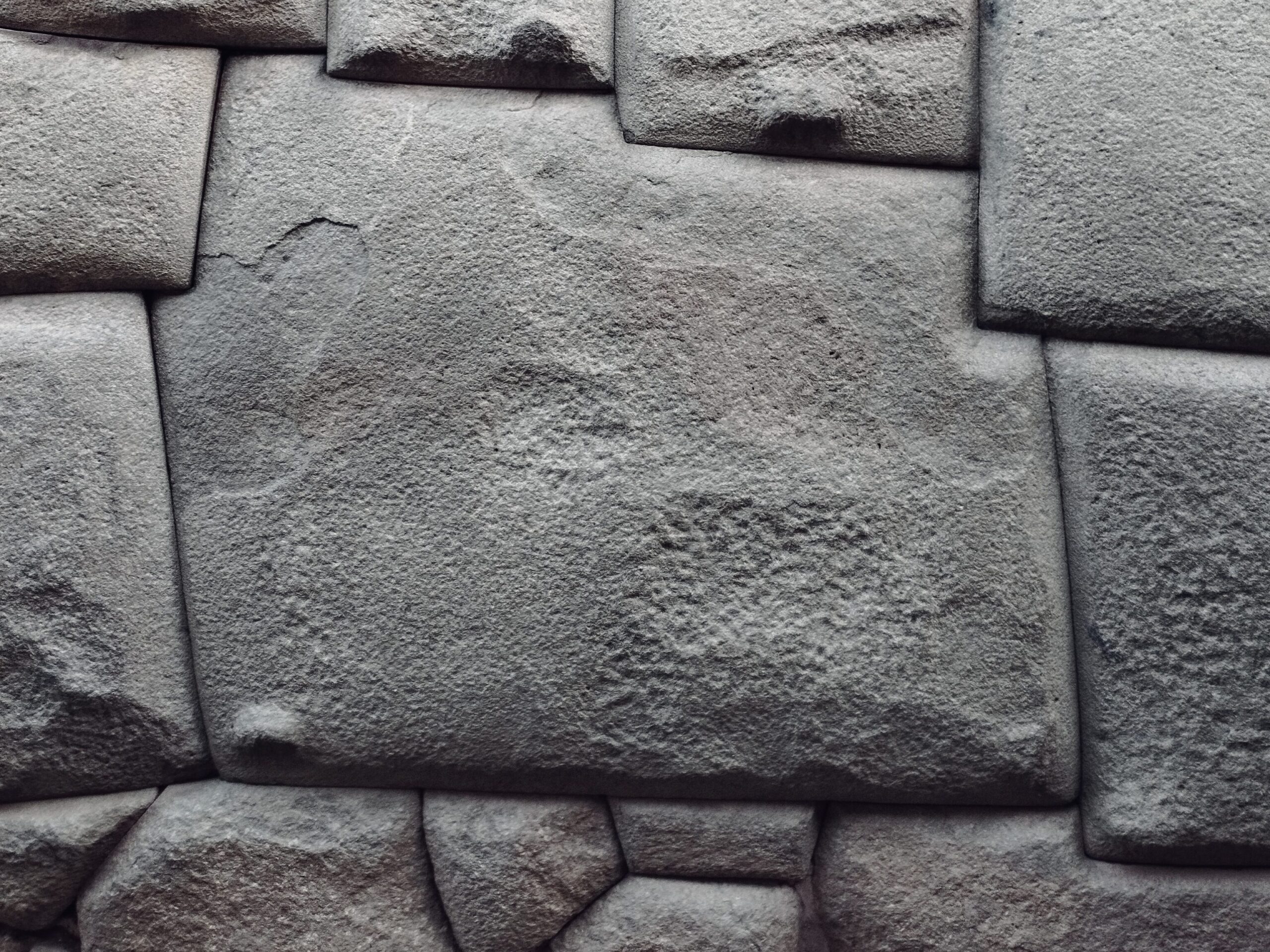
The Twelve-Angled Stone (Calle Hatun Rumiyoc)
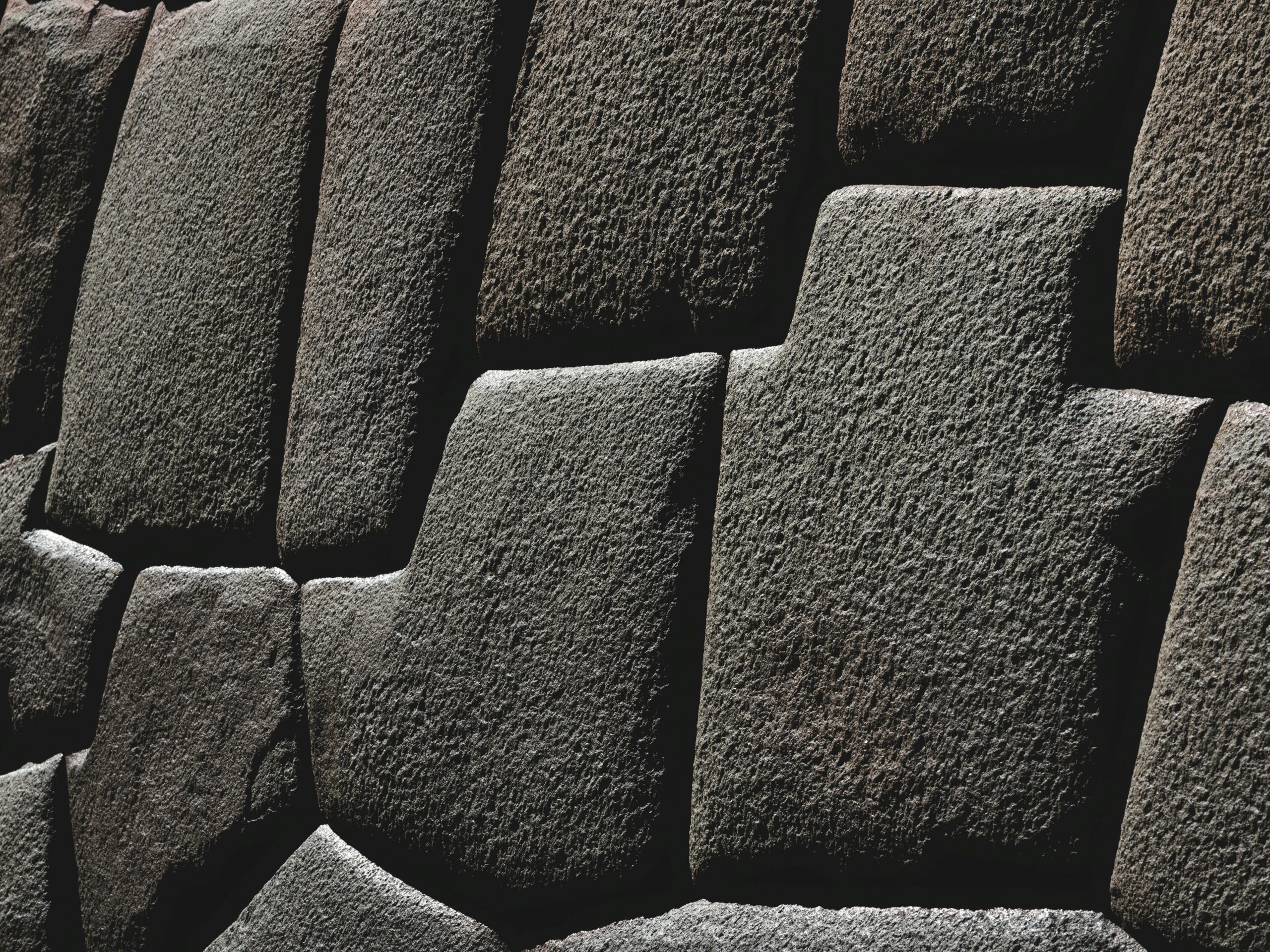
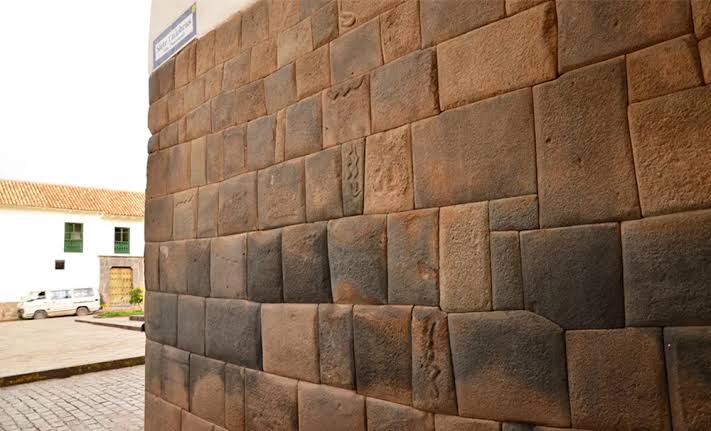
While it sits right in the historic center, this green diorite block remains a literal masterclass in hidden-in-plain-sight engineering. Part of the ancient palace wall belonging to Inca Roca, the stone features twelve perfectly carved angles that lock seamlessly with the surrounding masonry without a single drop of mortar. Beyond its visual perfection, the stone holds deep symbolic weight, representing the twelve royal Incan lineages. It also serves as a structural anchor; its interlocking design provides immense seismic protection, allowing the wall to survive massive historical earthquakes that completely leveled the Spanish buildings constructed above it.
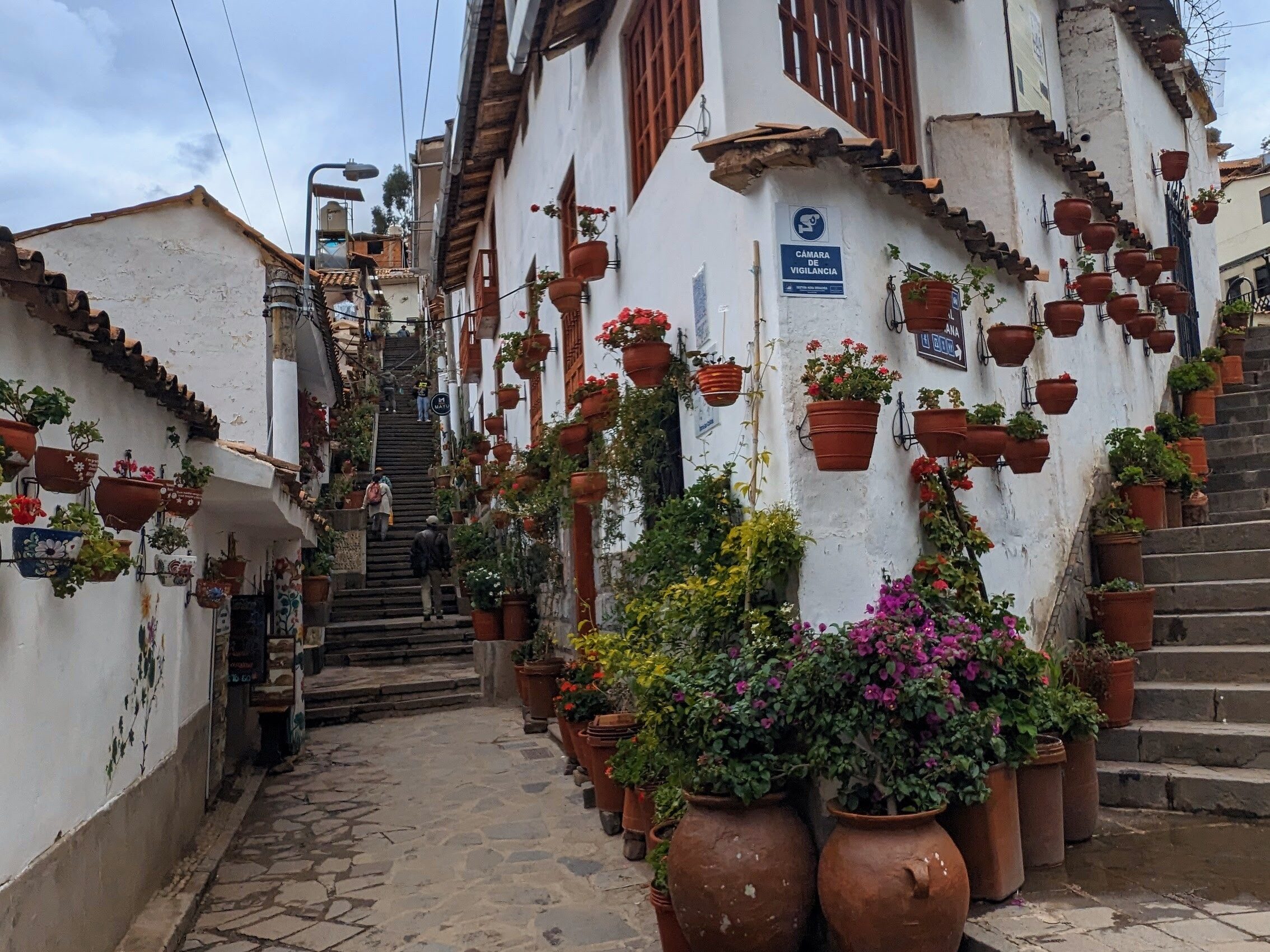
Calle Siete Borreguitos (The Seven Little Lambs Street)
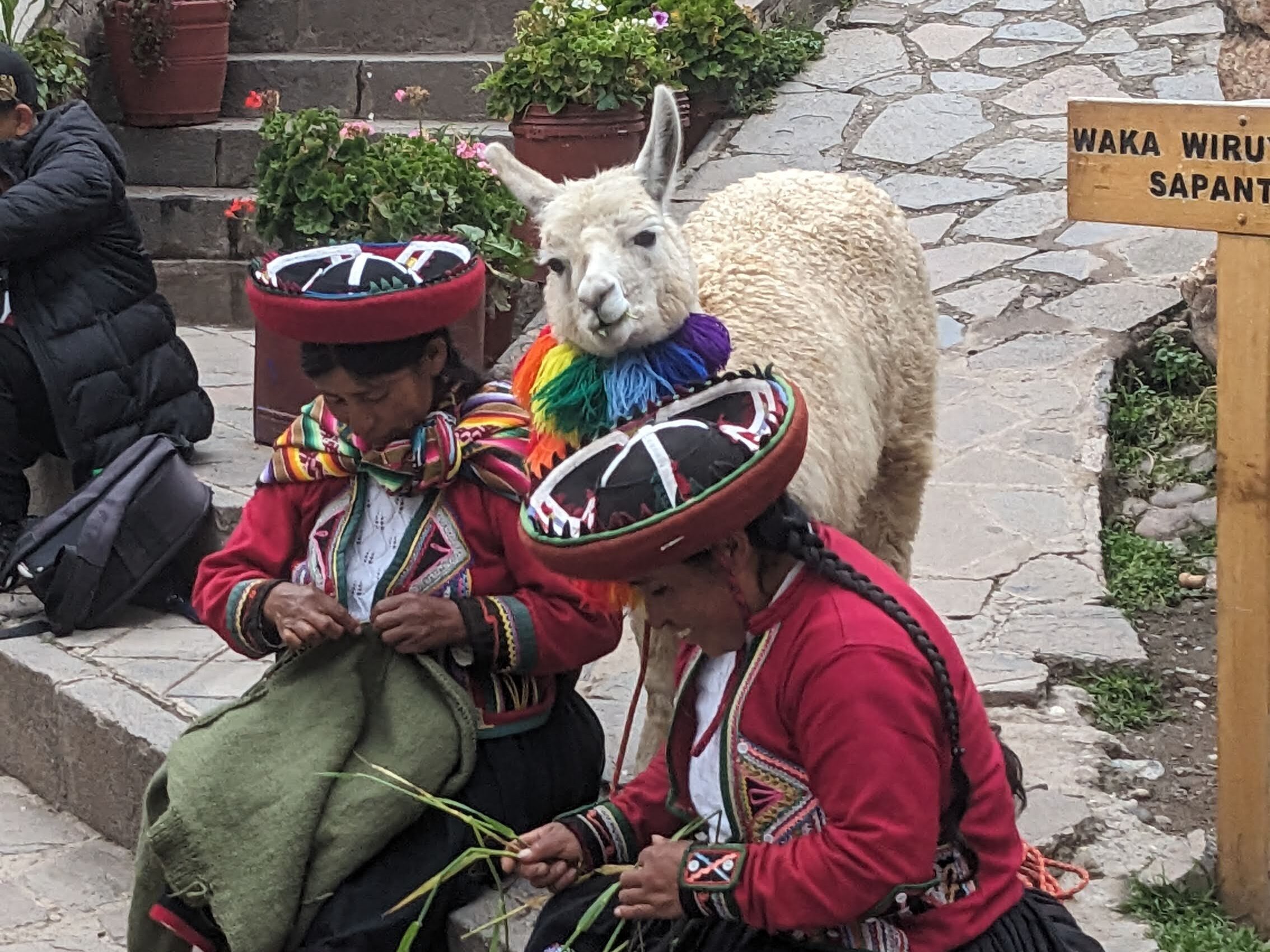
Cusco is famously obsessed with the number seven, but while most tourists pack into the narrow alleys of central San Blas, this steep pedestrian street remains a quiet neighborhood favorite. Connecting the upper hills down toward the Sapantiana Aqueduct, this narrow cobblestone alley is lined with bright, overhanging flower boxes, traditional white-and-blue painted adobe homes, and rustic wooden doorways. Historically, this was the path where local families walked their sheep and llamas down to the river, and it still offers one of the most evocative, peaceful walks in Cusco.
The Seven Crosses & “Seven Serpents” of San Blas
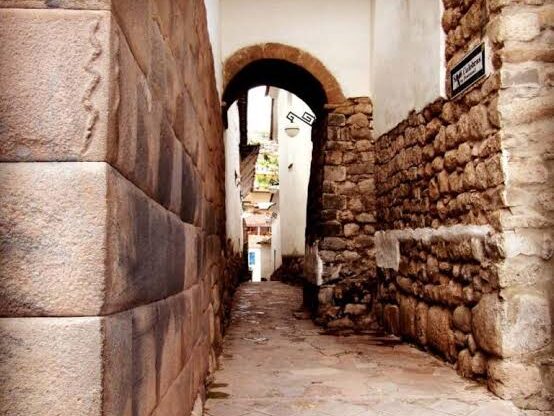
For travelers who love a historical scavenger hunt, the city center holds hidden symbols left behind during the Spanish campaigns to overwrite indigenous beliefs. Along Calle Siete Culebras (Seven Serpents Alley) near Plaza Nazarenas, you can scan the ancient Incan wall to find seven tiny snakes intricately carved in low relief into the stone blocks. To complement the hunt, look for the seven stone crosses placed by the Spanish at strategic entry points around the historic center, positioned specifically to ward off native spirits and bless the city’s thoroughfares.
The Cascading Water Wall of Plazoleta San Blas
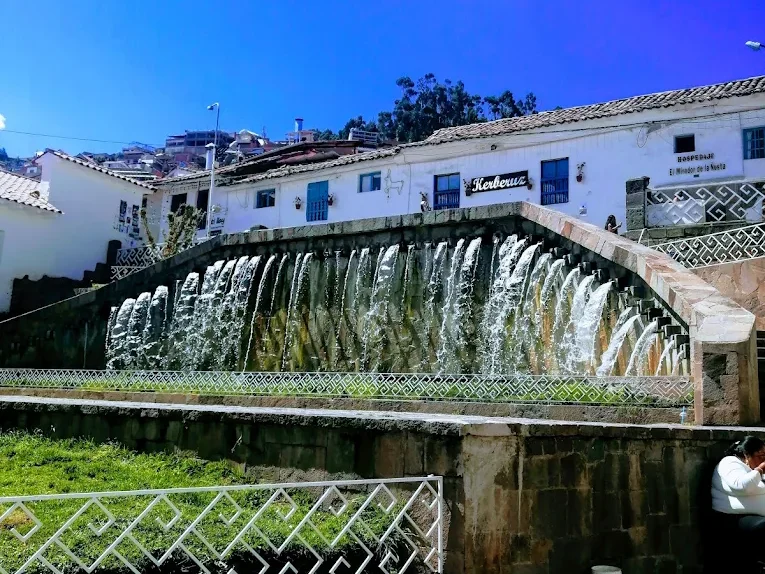
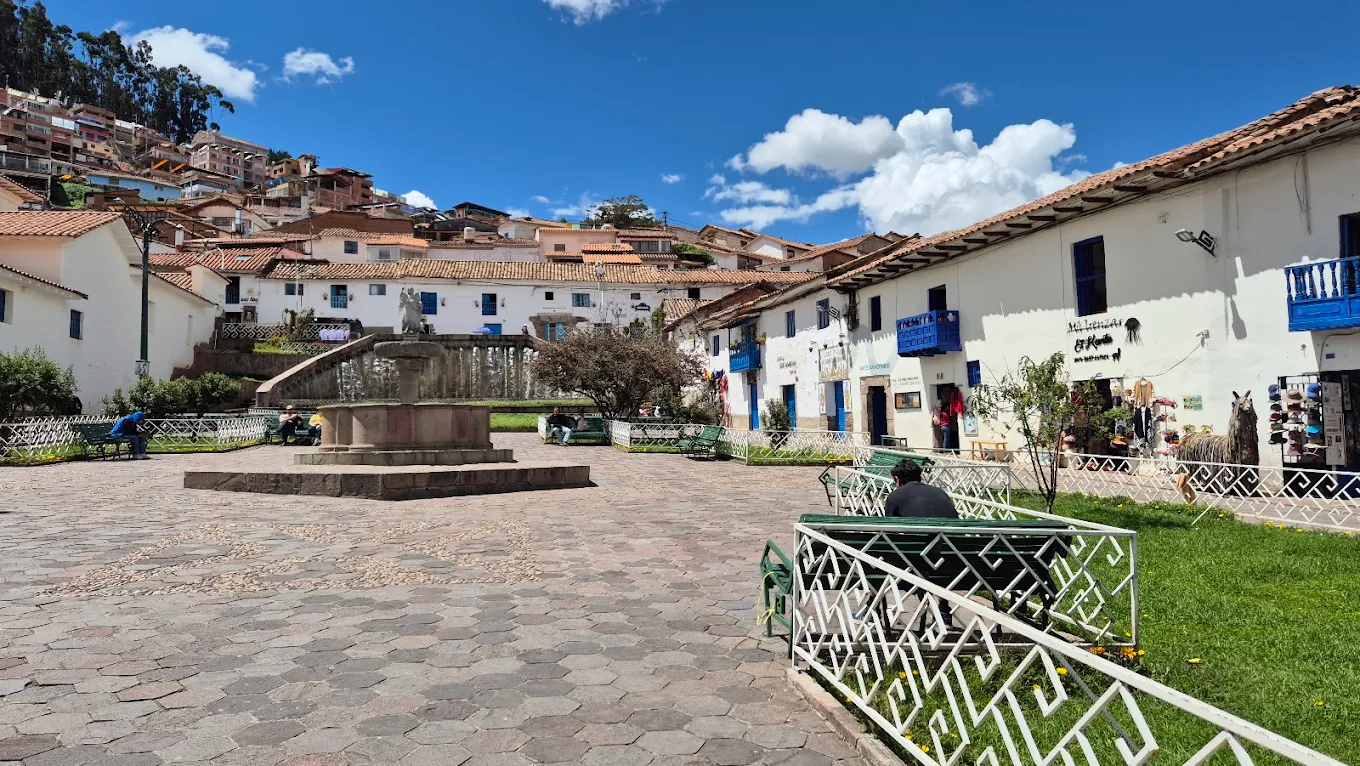
Tucked away in the heart of Cusco’s historic artisan quarter, the Plazoleta de San Blas features a beautifully unique stone water installation that perfectly mirrors the neighborhood’s creative energy. Instead of a traditional colonial basin, this modern architectural feature is built directly into the plaza’s stone terraces as a dramatic cascading waterfall.
Water flows from dozens of individual spouts at the top of the terrace, creating a continuous, shimmering wall of water that falls into a long stone basin below. It is a brilliant design that honors the ancient Incan obsession with flowing water and hydraulic engineering, bringing a sense of movement and peaceful acoustics to the square.
The plaza is surrounded by local art galleries, cozy cafes, and historic whitewashed buildings with bright blue balconies. Grabbing a coffee, sitting on the stone benches, and listening to the rhythmic rush of the cascading water wall is the absolute best way to experience the bohemian soul of Cusco.
Where to find it: Right in the center of the Plazoleta de San Blas, at the top of Cuesta de San Blas. It is especially beautiful to visit in the late afternoon when the golden hour light hits the flowing streams.
Ghost Houses, Hidden Crypts & Local Art
The Haunted House on Saphi Street (Calle Saphy 871)
An ugly, derelict four-story concrete structure stands in stark, jarring contrast to the beautiful colonial architecture near the historic center. Long rumored by locals to be cursed due to a tragic historical murder inside its unfinished walls, the property’s sinister reputation was cemented on May 1, 2013. It was here that international fugitive Ramón Castillo Gaete, the leader of a notorious, apocalyptic Chilean cult—took his own life while hiding from Interpol. Today, it stands as Cusco’s most famous modern dark tourism landmark, attracting those fascinated by local urban legends.
The Crypts of San Francisco Church & The Last Cuy Supper
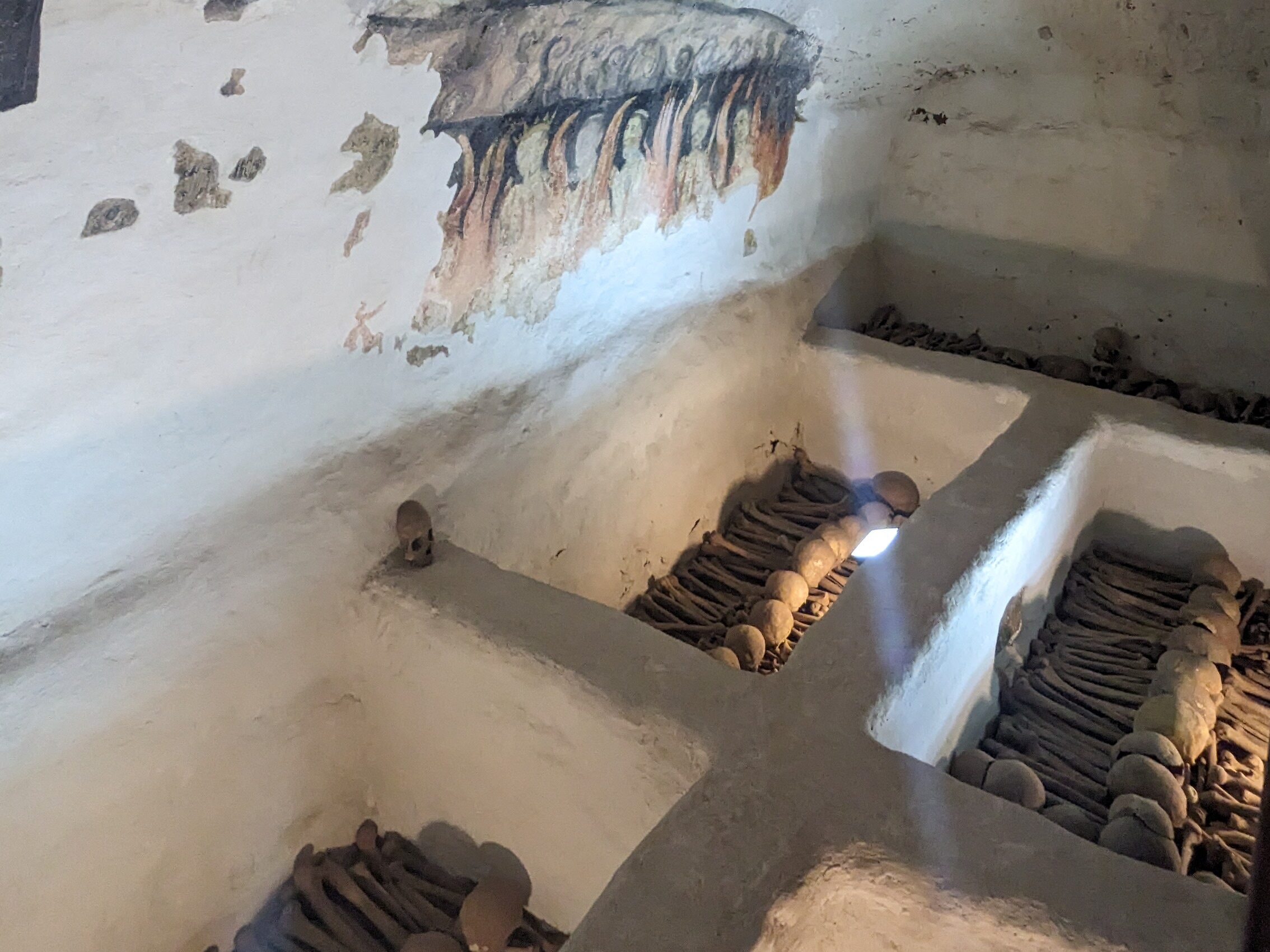
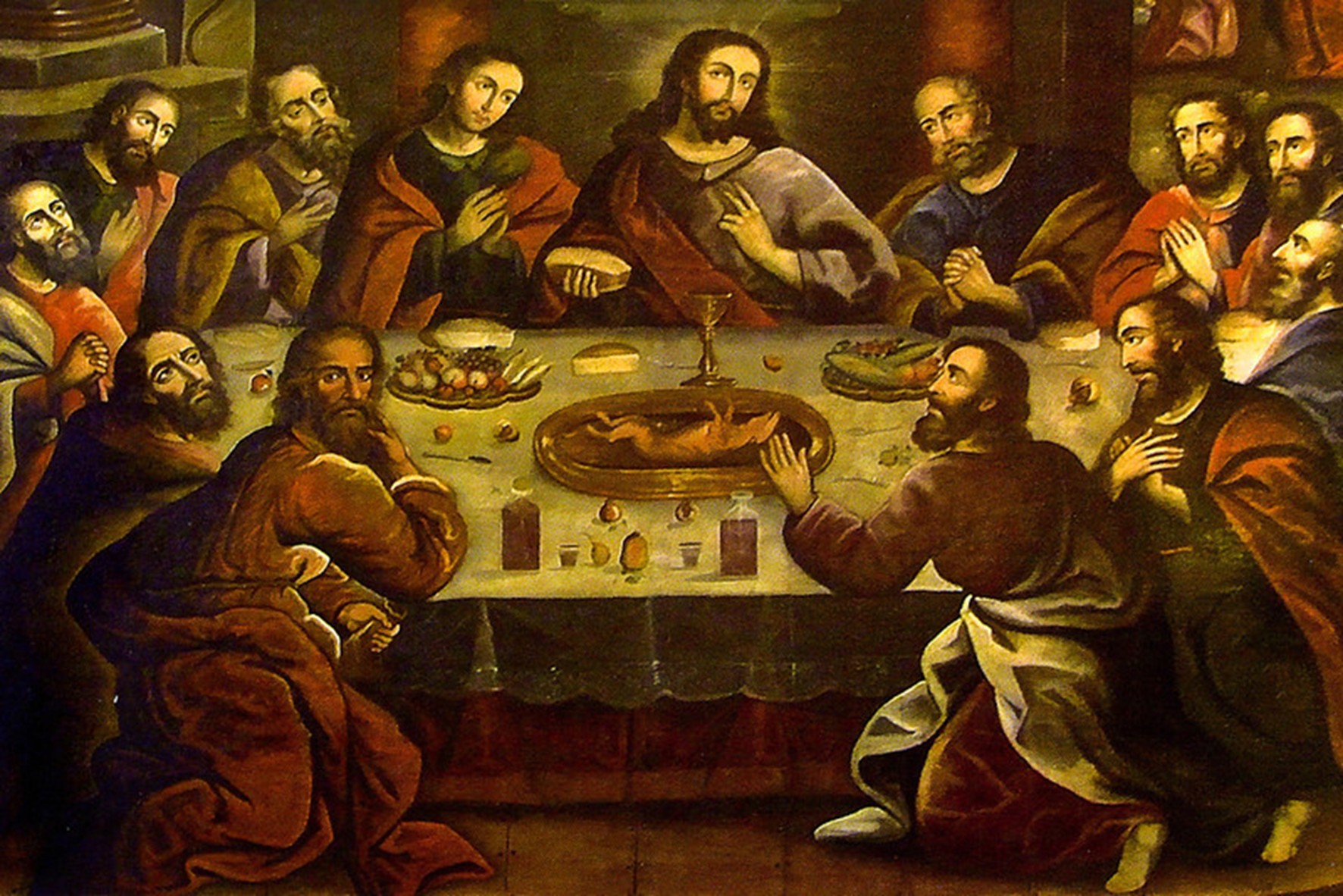
While the main Cathedral draws massive crowds for its famous painting of The Last Supper, where Christ and his disciples dine on roasted cuy (guinea pig) and drink chicha (corn beer), the San Francisco monastery offers a deeper, darker look into colonial history. Beneath the cold floors of the 17th-century San Francisco Church lies a silent network of brick burial crypts. Used long before public municipal cemeteries existed, these cold underground chambers contain human remains organized in precise geometric patterns, providing a stark, reflective walk through the city’s forgotten history.
Modern Monuments, & Local Food
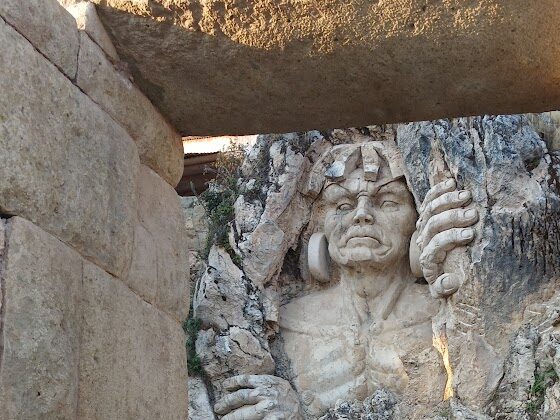
Abode of the Gods (Apukunaq Tianan / Apu Wiracocha)
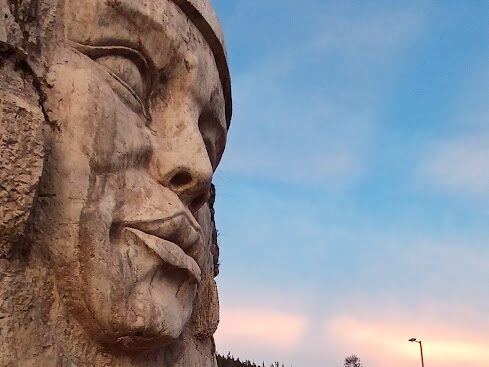
Located on the mountain peaks about 25 minutes north of the city center, this striking modern artistic monument honors traditional Andean cosmogeny and the Inca creator deity, Wiracocha. A contemporary Cusco sculptor carved massive, multi-meter-high faces of Incan gods, pumas, and mythological figures directly into the living rock faces of the mountain. The sheer scale of the sculptures against the vast, open Andean landscape makes it an incredibly dramatic viewpoint that bridges Cusco’s ancient spiritual roots with modern artistic expression.
The Thrift and Outdoor Gear Epicenter: Prolongación Pera
Forget the polished, overpriced corporate storefronts surrounding the Plaza de Armas. If you need a heavy-duty fleece, an emergency waterproof shell, or rugged trail pants without the painful retail markup, you need to head exactly where Cusco’s mountain guides and seasoned backpackers go: Prolongación Pera. Tucked away just south of Avenida del Ejército on the edge of the Santiago district, this steep, chaotic incline is the absolute heart of the city’s brick-and-mortar thrift scene.

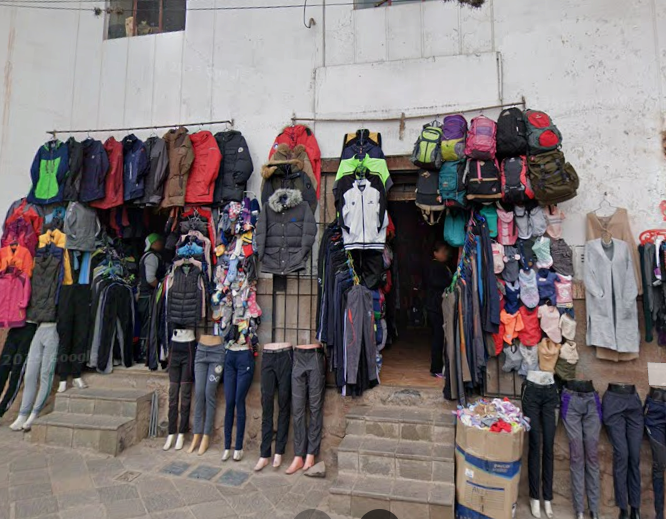
Unlike the sprawling, chaotic weekend street markets, the multi-story commercial galleries here, most notably the legendary, multi-level Chabuca Plaza operate year-round. The inventory on this street is spectacular for one specific reason: Cusco is a terminal station for global trekking. Thousands of international hikers realize their bags are too heavy right before flying home, so they trade or sell off premium, high-end technical gear to local shop owners.
As you climb the steep pavement and step into the dense, maze-like galleries, you will find yourself flipping through massive racks of imported ropa americana, windbreakers, classic streetwear, and legitimate outdoor apparel. With a little patience, it is entirely possible to unearth name-brand trail gear and vintage layers for a mere 5 to 45 Soles. It is loud, unapologetically local, and a masterclass in authentic Andean commerce that mainstream travel blogs completely overlook.
- Where to Find It: Prolongación Pera runs directly south from the back of the San Pedro train station area, slicing just past Avenida del Ejército into Santiago.
- The Inside Track: Because these are permanent indoor shops rather than temporary Saturday street stalls, you can browse comfortably on weekdays to avoid the crushing weekend crowds.
The Hidden Picanterías of Cusco (La Chomba or La Quinta Eulalia)
While tourists pack the expensive sushi-ceviche fusion bars around the Plaza de Armas, savvy travelers head past the historic center to find Cusco’s true culinary soul: the Picanterías. Historically, these were informal living rooms where working-class locals gathered after a long day to drink home-brewed chicha de jora (fermented corn beer) and share massive, communal plates of heavily spiced Andean comfort food.
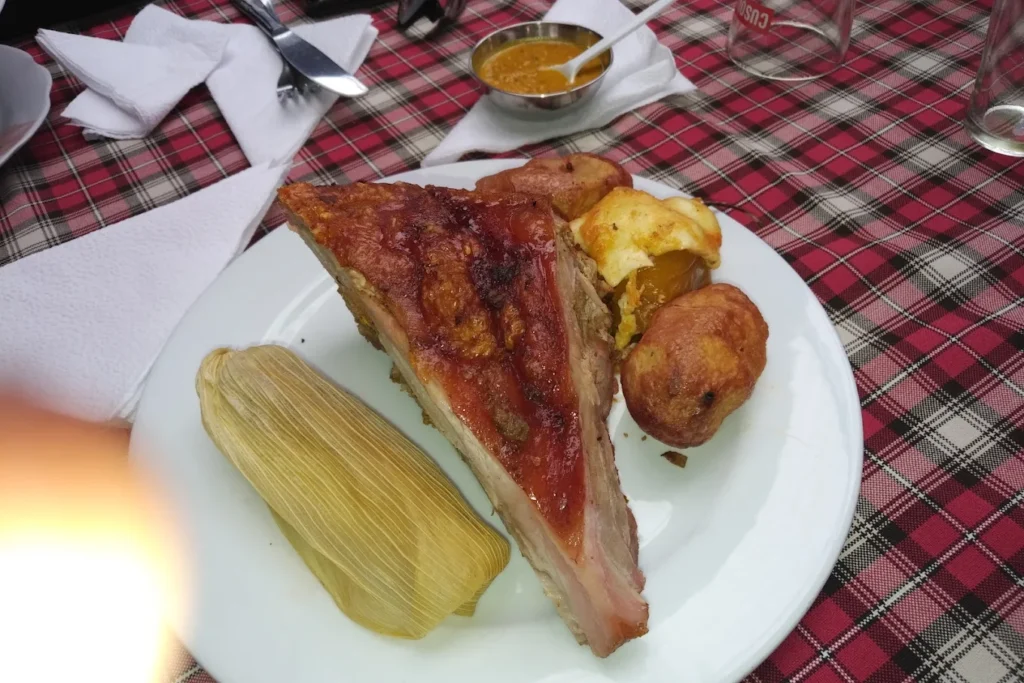
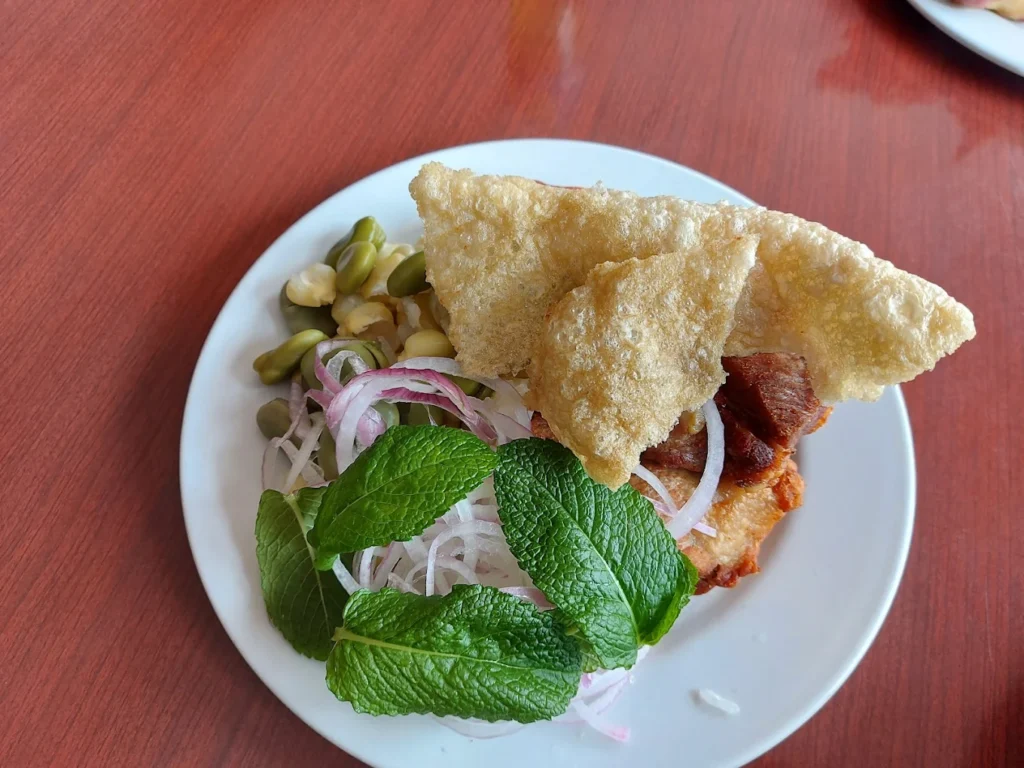
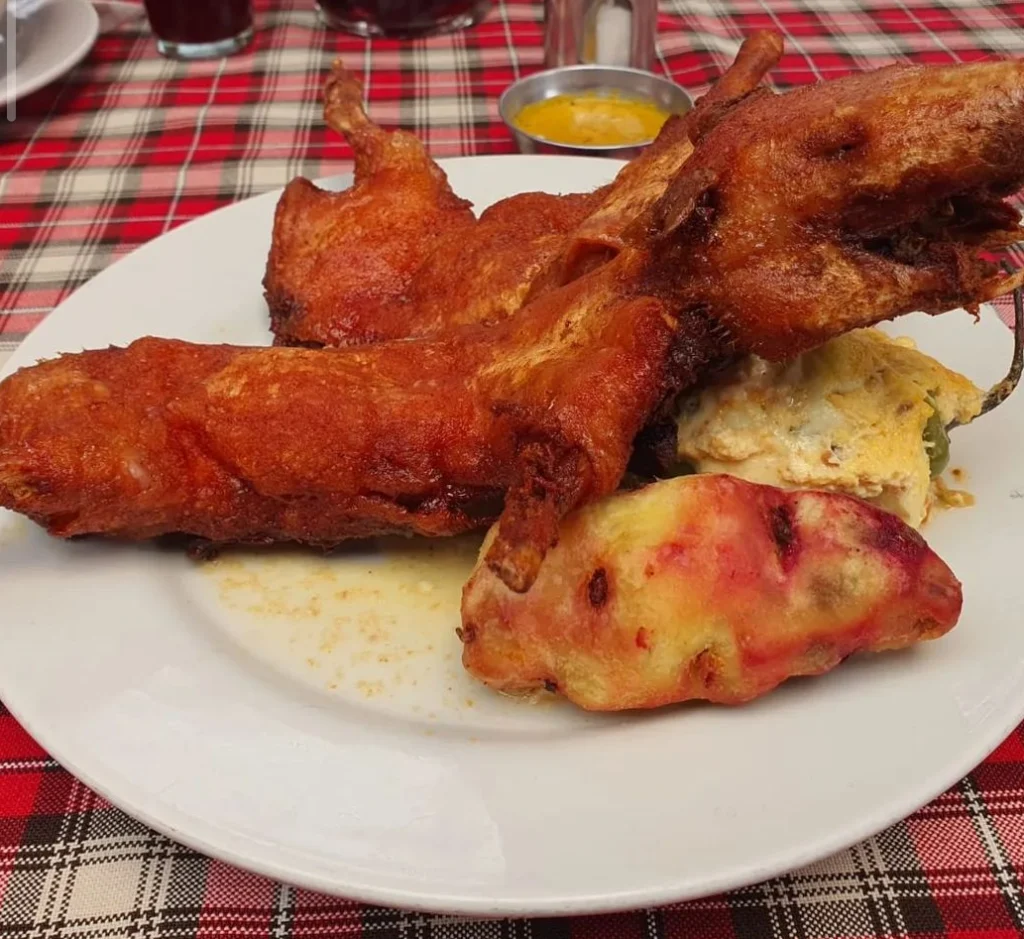
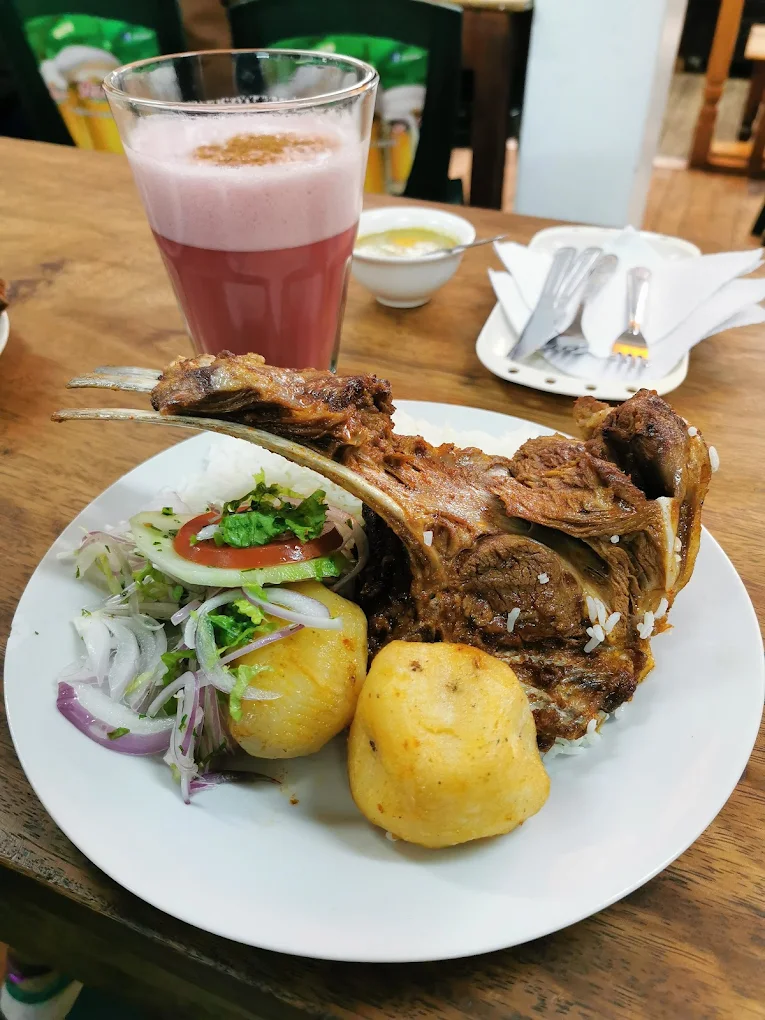
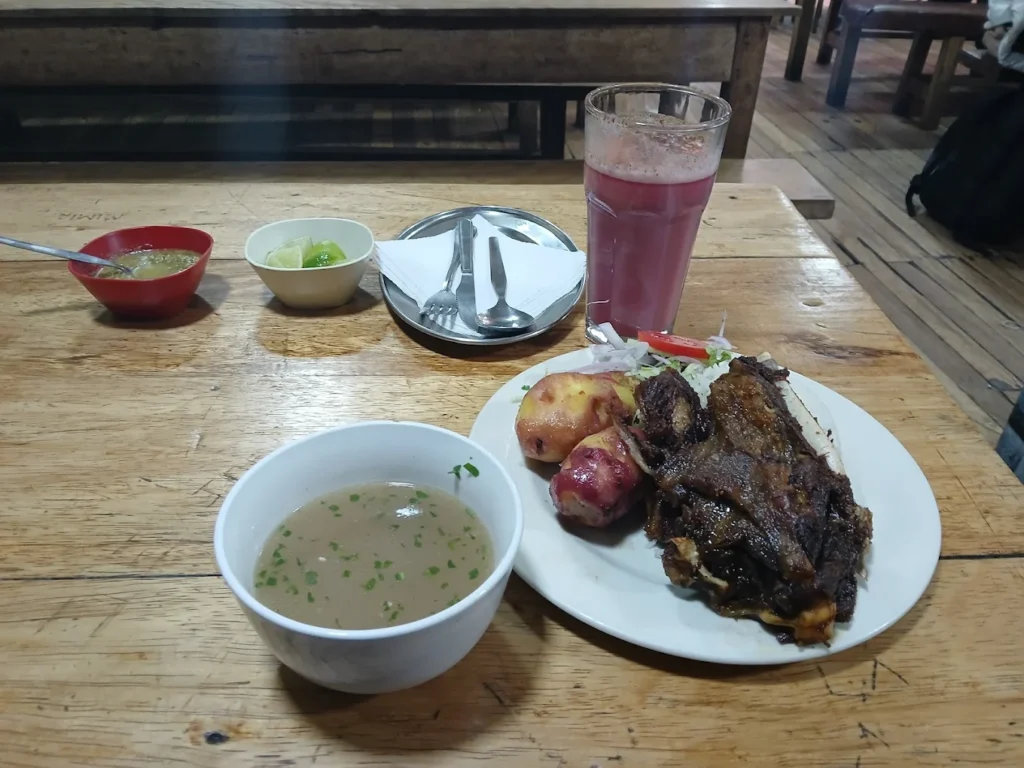
Two legendary spots perfectly capture this unmanicured tradition: La Chomba (hidden on Calle Tullumayo) and La Quinta Eulalia (tucked away inside a rustic, open-air courtyard on Calle Choquechaka).
Step inside, and you are immediately hit with the rich aroma of woodsmoke, roasting meats, and fresh herbs. The dining rooms are filled with long wooden benches shared by local neighborhood families. There are no polished menus here. Instead, you order the Extra—the rotating daily special—or massive traditional plates meant to be shared.
- The Secret Dishes to Try: Skip the standard lomo saltado and order Kapchi de Setas (a rich, savory winter stew made with wild Andean mushrooms, fresh cheese, potatoes, and local broad beans) or Malaya Frita (tender, slow-boiled flank steak that is flash-fried until crispy on the outside and served over a mountain of native potatoes).
- The Drinking Ritual: No meal at a picantería is complete without a Caporal—a massive, one-liter glass filled with a half-and-half mix of traditional sour chicha de jora and sweet frutillada (corn beer blended with fresh wild strawberries).
Where to find them:
- La Chomba: Calle Tullumayo 115. Look for the simple wooden sign and the red plastic bag tied to a bamboo pole outside (the traditional Andean symbol showing that fresh chicha has just been brewed inside).
- La Quinta Eulalia: Calle Choquechaka 384. Walk straight down the narrow corridor into the hidden, sunlit garden patio.
- Logistics: Go strictly for lunch between 12:00 PM and 3:30 PM. These spots are locked tight by dinner time, as the food is cooked fresh every morning and runs out fast.
High Altitude Hidden Wonders
Waqrapukara: The Horned Fortress
If you want to experience an ancient wonder completely to yourself, Waqrapukara is the ultimate off the beaten path destination. Sitting at a breathtaking 4,300 meters above sea level on the precipice of the deep Apurimac Canyon, this mountain stronghold looks like something straight out of a fantasy novel. Archaeologists are still actively debating its true historical purpose, wondering if the dramatic complex served as a military fortress, a sacred sanctuary, or an astronomical observatory. The ancient site is incredibly impressive, featuring meticulously built stone platforms, ceremonial squares, and a massive natural rock monolith that crowns the mountain landscape.
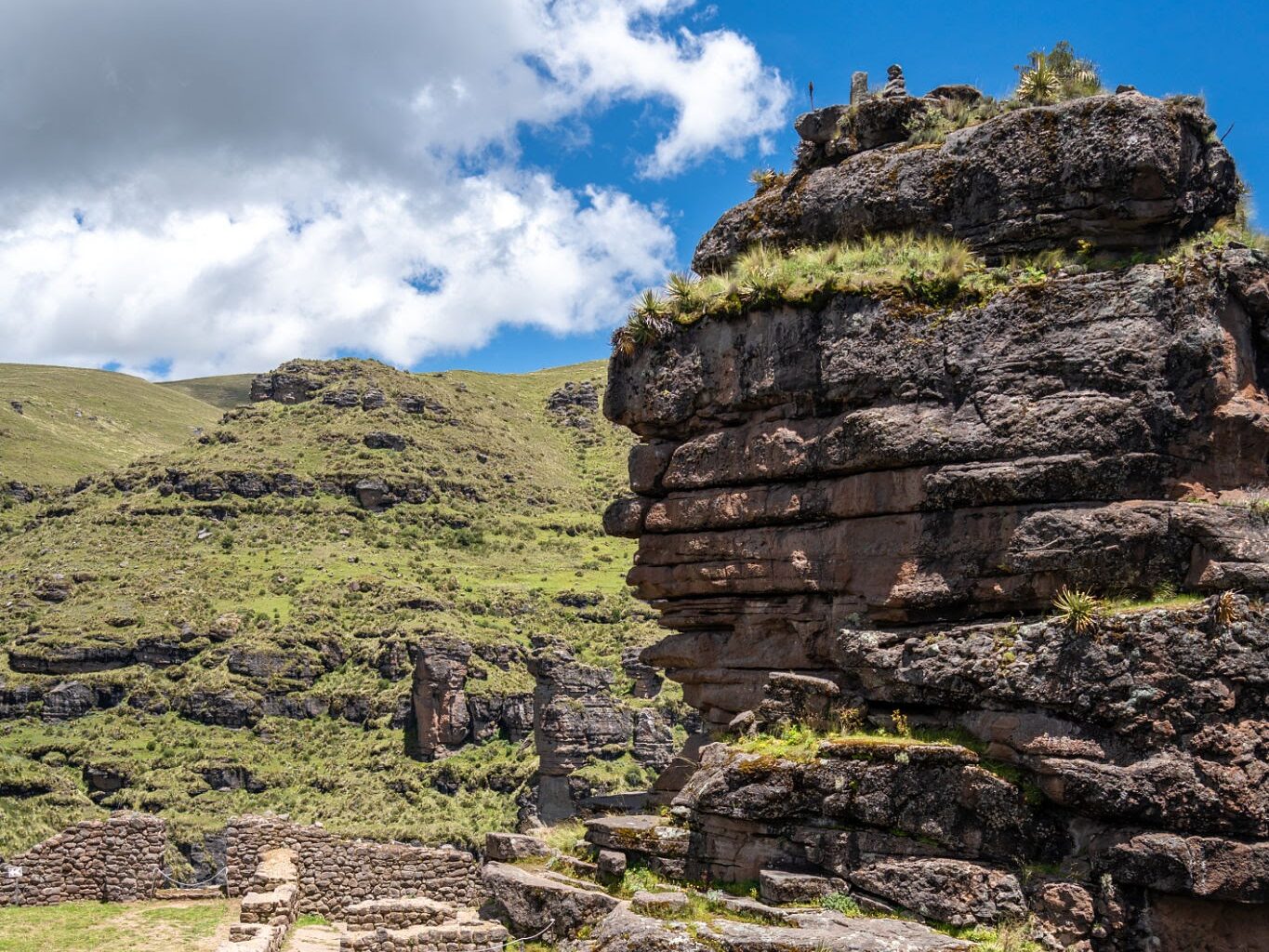
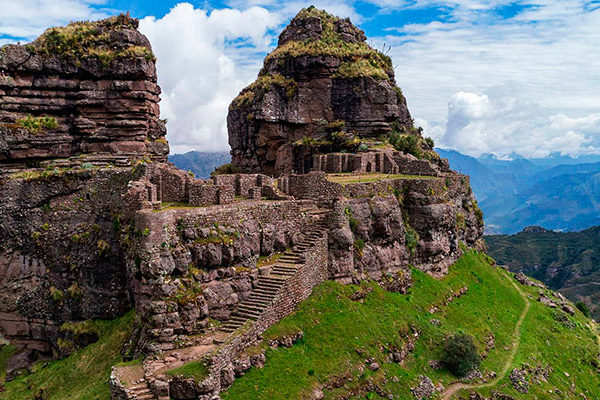
How to get there: The journey requires a two and a half hour drive south from Cusco to the community of Santa Lucia. From the trailhead, you will embark on an incredible high-altitude trek that takes about two hours to reach the ruins.
Tres Cruces: The Three-Sun Sunrise
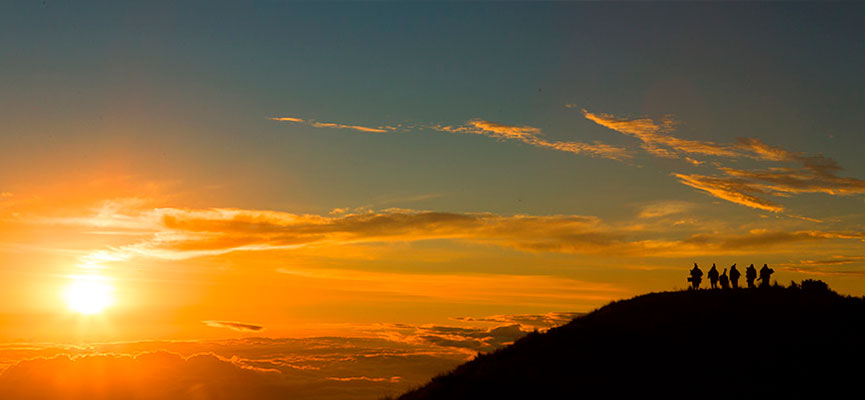
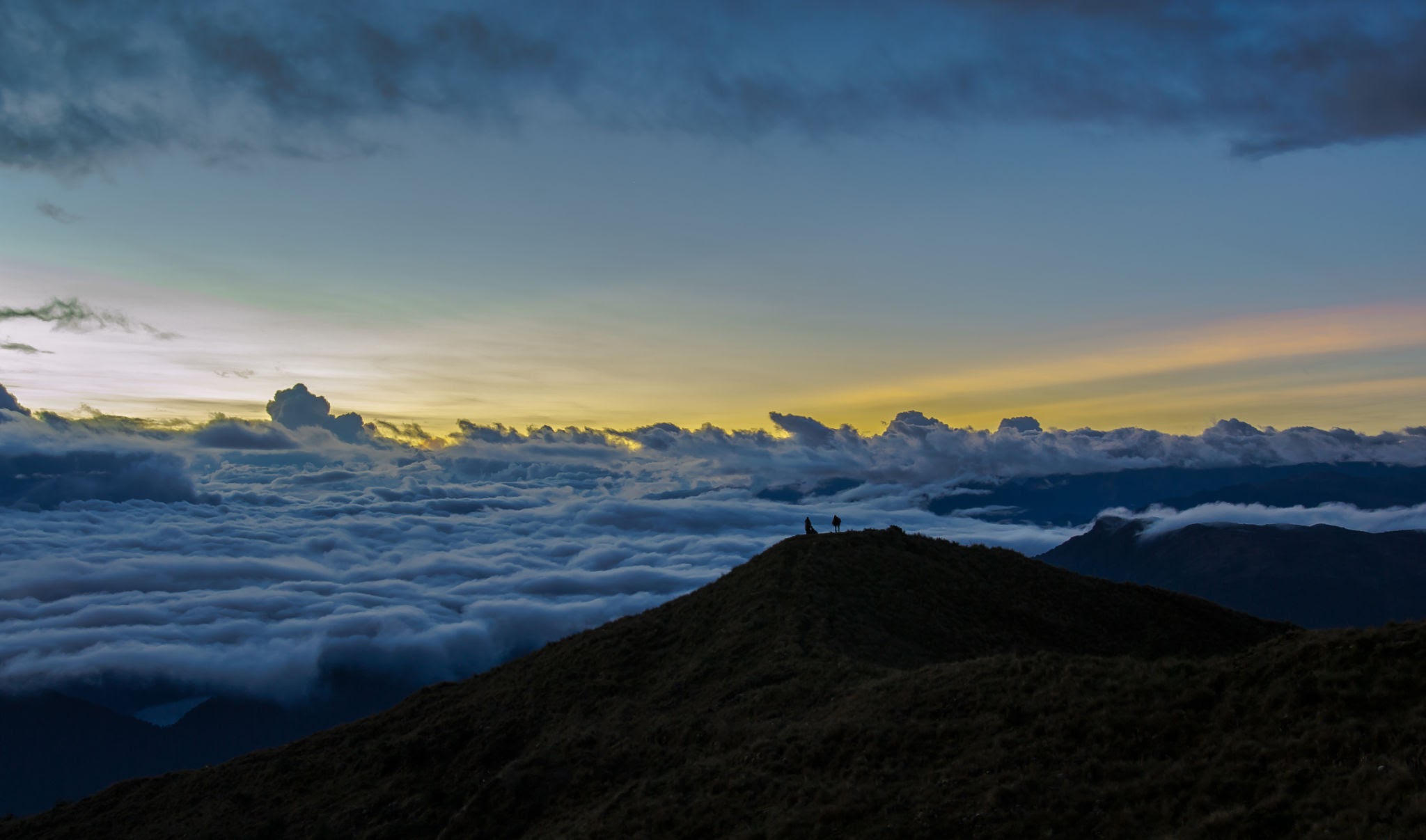
Deep on the eastern edge of the Andean highlands sits the Tres Cruces viewpoint, home to one of the most unique and spectacular natural optical illusions on the planet. Located roughly 100 kilometers from Cusco, this mountain ridge looks directly down into the vast, cloud-covered Amazon basin. Around the winter solstice on June 21, unique atmospheric conditions and suspended ice crystals distort the rising sunlight. This creates a stunning optical phenomenon known as a parhelion, giving the incredible illusion that three golden suns are rising simultaneously over the misty jungle canopy.
FAQs
FAQs to add:
- Do I need the Cusco Tourist Ticket (Boleto Turístico) for these hidden gems? No, the vast majority of these off-the-beaten-path locations, like Q’enqo Chico, Temple of the Moon, and Sapantiana, are completely free to access.
- Are Cusco’s hidden ruins safe to visit alone? While daytime exploration is perfectly safe, places like the Saphi Haunted House should not be visited alone after dark due to a lack of lighting and isolation.
- How do I get to the ruins above San Blas without a tour? You can easily catch a blue “Señor de Huanca” bus from the city center up to the Cristo Blanco stop, or take a 25-minute uphill walk starting from Calle Siete Borreguitos.