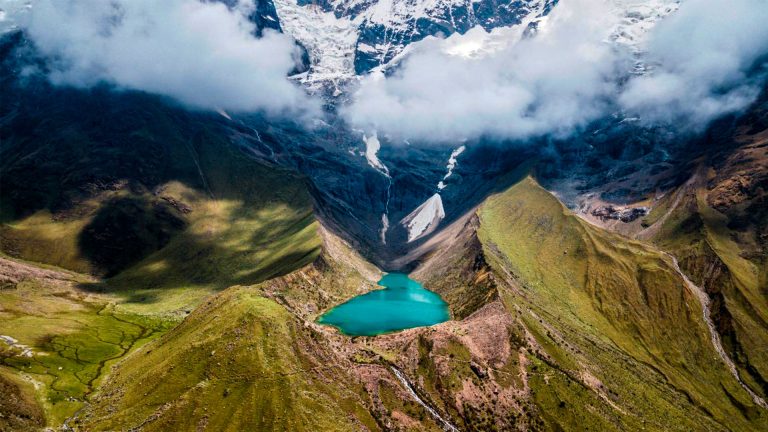




Welcome to the ultimate frontier of the Amazon. Nestled in southeastern Peru where the tropical Andes meet the Amazon Basin, Manu National Park is widely recognized as the most biodiverse natural reserve on earth. Spanning an immense 1,716,295.22 hectares (17,162.95 square kilometers), this pristine wilderness stretches all the way from high Andean grasslands down through misty cloud forests to lowland tropical rainforests.
Whether exploring the Amazon is a lifelong bucket list dream or you are an avid wildlife enthusiast, Manu offers an unparalleled encounter with nature in its purest, most unaltered form.
Geography and Elevation
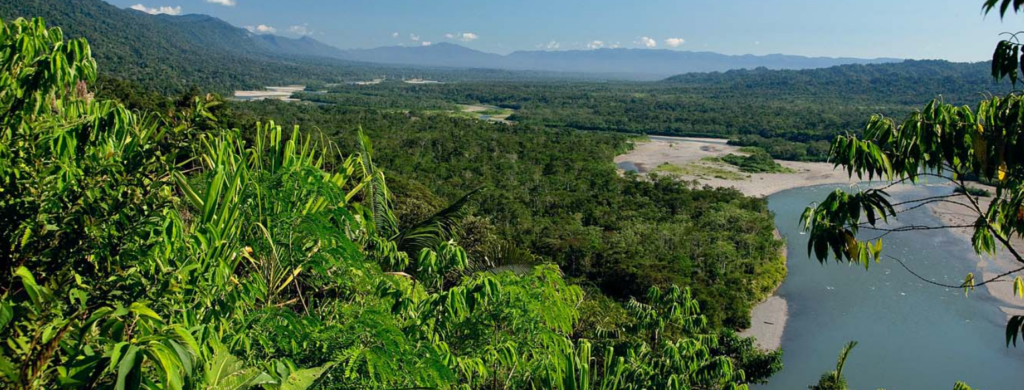
Manu is unique because of its dramatic vertical drop. The park’s elevation begins at just 150 to 300 meters above sea level where the Manu River merges with the Madre de Dios River, and climbs all the way up to over 4,200 meters at the rugged mountain peaks. This vast elevation gradient creates a mosaic of highly diverse ecosystems within a single protected region.
- Total Area: 1,716,295.22 hectares (17,162.95 square kilometers)
- Location: Southeastern Peru (spanning the Cusco and Madre de Dios regions), bordering Brazil and Bolivia
- Ecosystems: Andean Grasslands, High Andean Jungle, Cloud Forests, and Lowland Amazon Rainforest
Understanding the Three Zones of Manu
To balance strict conservation with global research and sustainable travel, Manu National Park is divided into three distinct management zones.
1. The Cultural Zone (Buffer Zone)
- Size: 120,000 hectares (300,000 acres)
- Access: Open to visitors without an official guide.
- This acts as the gateway to the reserve. Located primarily on the banks of the Madre de Dios River, it is the only area where independent travel is permitted and is home to several local native settlements. The small communities here engage in low-impact sustainable industries such as forestry, agriculture, and cattle raising. Some indigenous communities choose to warmly welcome travelers to share their traditional lifestyles.
2. The Reserved Zone
- Size: 257,000 hectares (635,000 acres)
- Access: Heavily restricted: visitors must book through an authorized tour operator and be accompanied by a registered guide.
- Spanning the lower stretch of the Manu River, this zone is strictly dedicated to controlled ecotourism and scientific research. Tourism is limited to ensure the environment remains undisturbed, making it an incredible, exclusive destination for guided wildlife safaris along oxbow lakes and winding rivers.
3. The Core Zone
- Size: 1,532,806 hectares (3,787,000 acres)
- Access: Strictly prohibited to the public.
- This is the largest and most protected part of the park, preserved entirely for the rehabilitation and preservation of native flora and fauna. It is home to the famous Cocha Cashu Biological Station and accepts only government approved biologists and anthropologists. With zero human impact, no logging, and no hunting, it stands as one of the most pristine, unaltered natural regions remaining on our planet.
Historical Milestones
The journey to preserving this ecological treasure spans several decades of local and international conservation efforts.
- Manu National Reserve Founded 1968
The Peruvian government establishes the initial boundaries of the area as a national reserve to protect its unique wildlife.
- Official National Park Status 1973
The territory is officially designated as Manu National Park, granting it the highest level of environmental protection under Peruvian law.
- UNESCO Biosphere Reserve Recognition 1977
UNESCO recognizes the broader region as a Biosphere Reserve, defining it as an essential global learning place for sustainable development.
- UNESCO World Heritage Site Designation 1987
Manu is declared a World Heritage Site, cementing its status as an area of outstanding universal value to humanity.
- Boundary Expansion 2009
The official total size of the Manu National Reserve is expanded to its current area of 1,716,295.22 hectares, secure tracking more territory for absolute preservation.
Unmatched Global Biodiversity
When scientists say Manu is the most biodiverse place on earth, they have the data to back it up. A single acre of land in Manu can support up to 250 distinct species of trees. Additionally, research shows the park ranks at the absolute top of global listings for reptile and amphibian diversity, remaining largely free from invasive species.
Species Diversity Checklist
| Taxonomic Group | Number of Documented Species | Ecological Highlight |
| Plants | Over 20,000 species | Represents 10 percent of all vascular plants on earth |
| Butterflies | Over 1,300 species | Incredible color variations across the canopy |
| Birds | Over 1,000 species | A paradise for global birdwatchers |
| Bees | 650 species | Vital pollinators driving the jungle ecosystem |
| Mammals | 221 species | Home to apex predators and rare monkeys |
| Fish | 210 species | Dominating the complex Amazon river basins |
| Amphibians | 155 species | High global ranking for unique frogs and toads |
| Primates | 14 species | Including playful howler and spider monkeys |
| Reptiles | 132 species | From river caimans to elusive jungle snakes |
Human Demographics and Isolated Tribes
Manu is not just a sanctuary for wildlife: it is also a vital cultural homeland. Several native indigenous tribes live within the boundaries of the park, maintaining their traditional hunter-gatherer lifestyles in relative isolation from modern society. Among the known groups are the Yora, Mashco-Piro, Matsiguenka, Harakmbut, and Yine tribes. Because their traditional way of life does not negatively impact the ecology, select tribes are the only people permitted to utilize the protected Manu River. Protecting the park’s boundaries is critical to safeguarding these communities from external threats, including diseases and encroachment by illegal loggers or miners.
Wildlife Highlights
The sheer variety of creatures here is staggering. Depending on the spirit of the jungle, visitors can spot an array of fascinating animals. Here are a few of the iconic residents to look out for.
The Andean Cock-of-the-rock
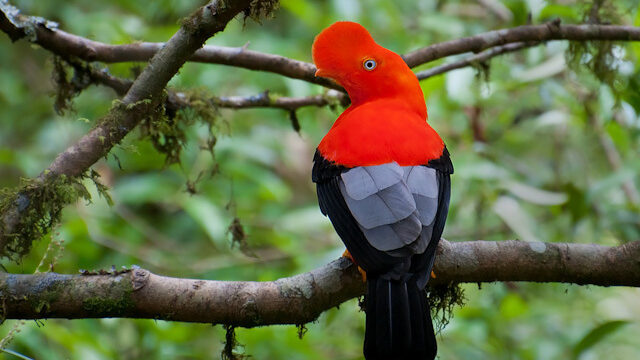
This striking, bright red-orange bird is the official national bird of Peru. Famous for its unique disc-like crest and elaborate courtship dances, spotting one in the misty cloud forest is an unforgettable highlight.
Capybara
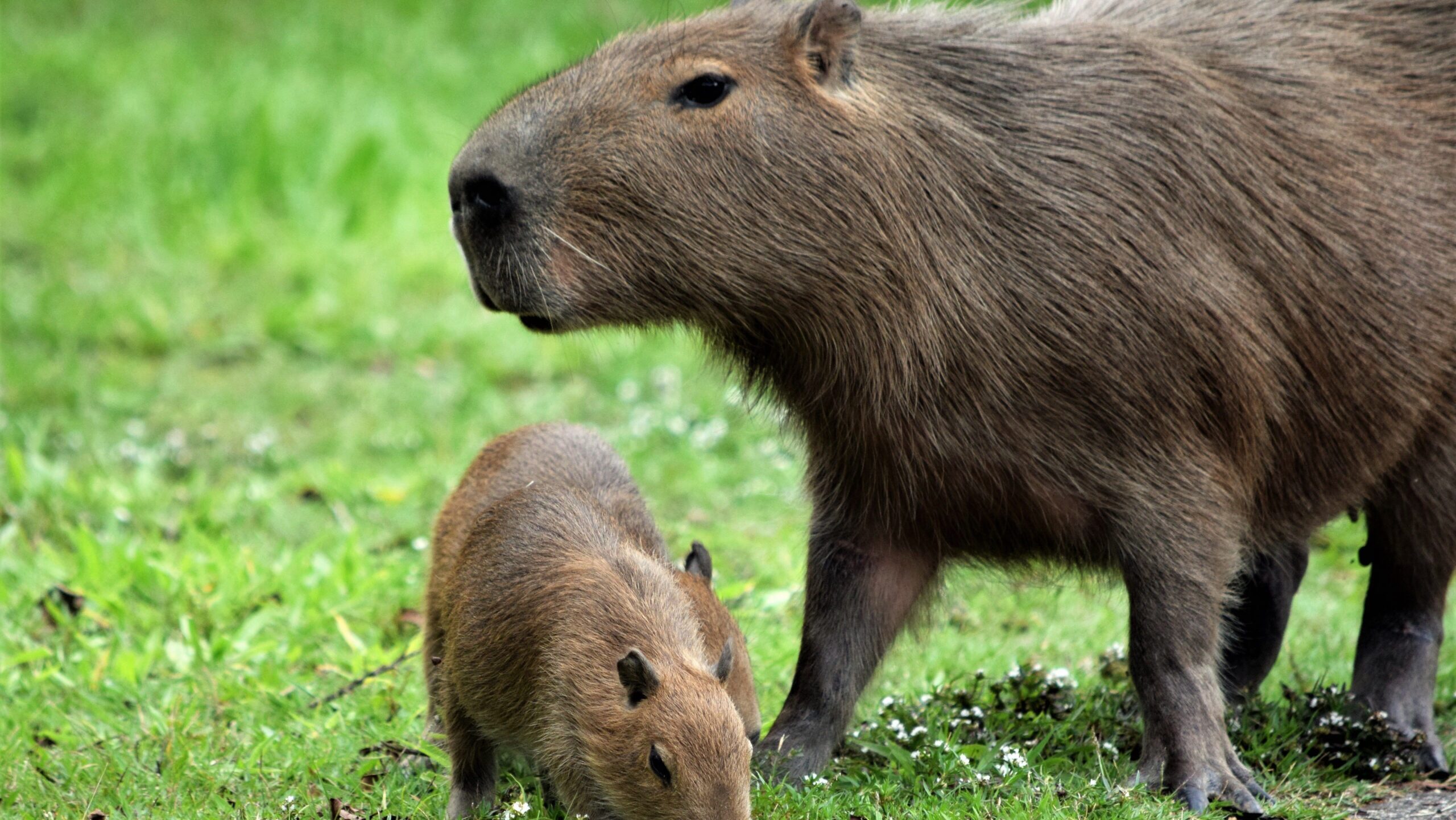
Commonly known as the “Carpincho,” this is the largest rodent in the world. They love spending time along the rivers and streams of the Amazon. Capybaras are incredibly social creatures, typically hanging out in family groups of 10 to 20, though groups can occasionally swell up to 100 individuals.
Giant Otters
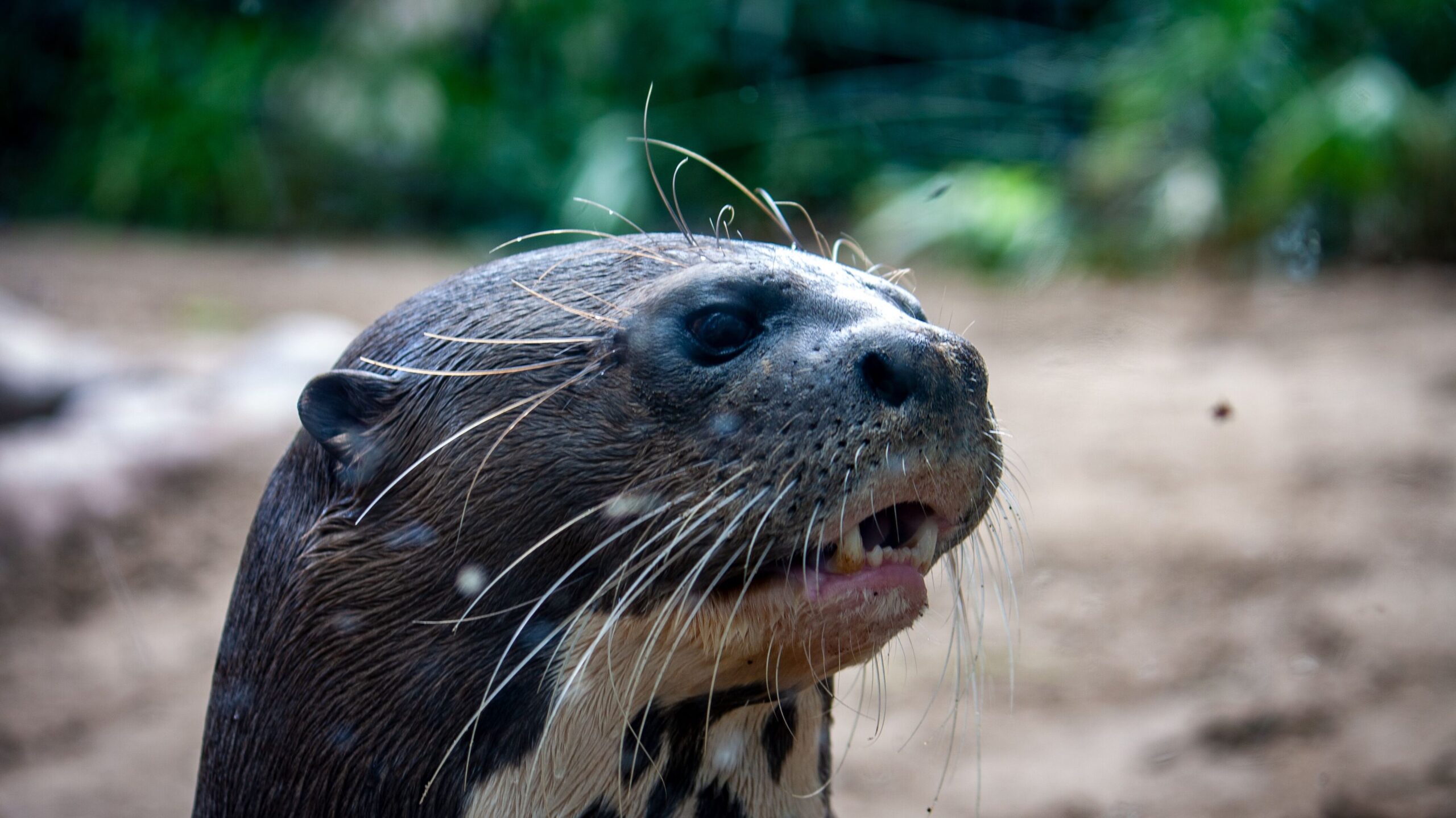
One of the most impressive aquatic species in the park, these river wolves can grow up to 1.8 meters (nearly 6 feet) in length. They live in tight-knit family groups and can be seen hunting, eating, and playing together in the park’s oxbow lakes.
Sloths
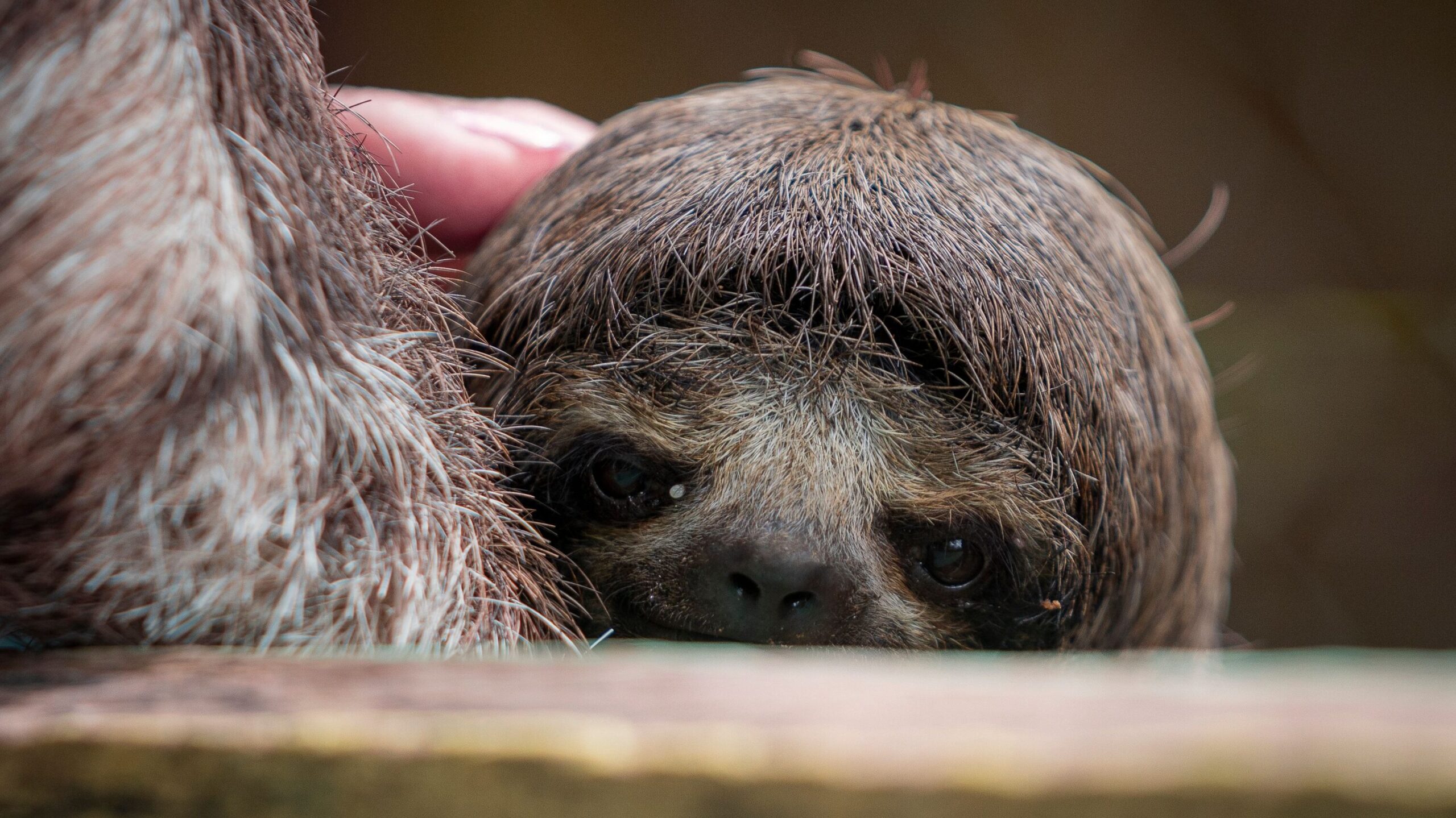
Two distinct species of sloths live here, easily identified by the number of claws on their front feet. Two-toed sloths are larger and spend most of their time hanging upside down from tree limbs. Three-toed sloths feature a distinctive facial mask that looks like a permanent smile. They possess extra neck vertebrae that allow them to turn their heads almost all the way around, just like an owl.
Collared Anteater
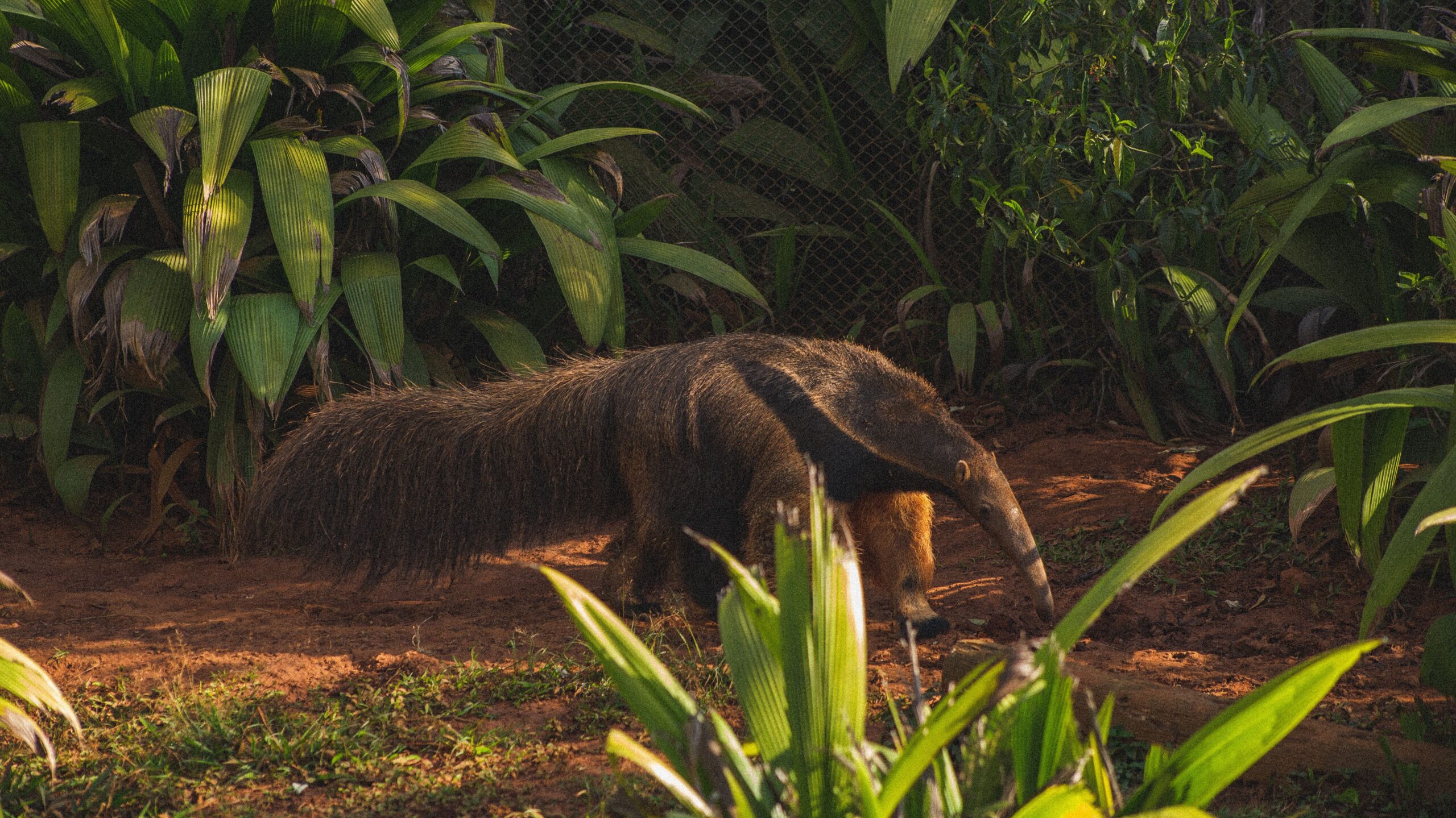
A smaller descendant of the Giant Anteater, the Collared Anteater (also called the southern tamandua) is a fantastic climber. It frequently hunts for ants and termites near the park’s dense networks of streams and waterways.
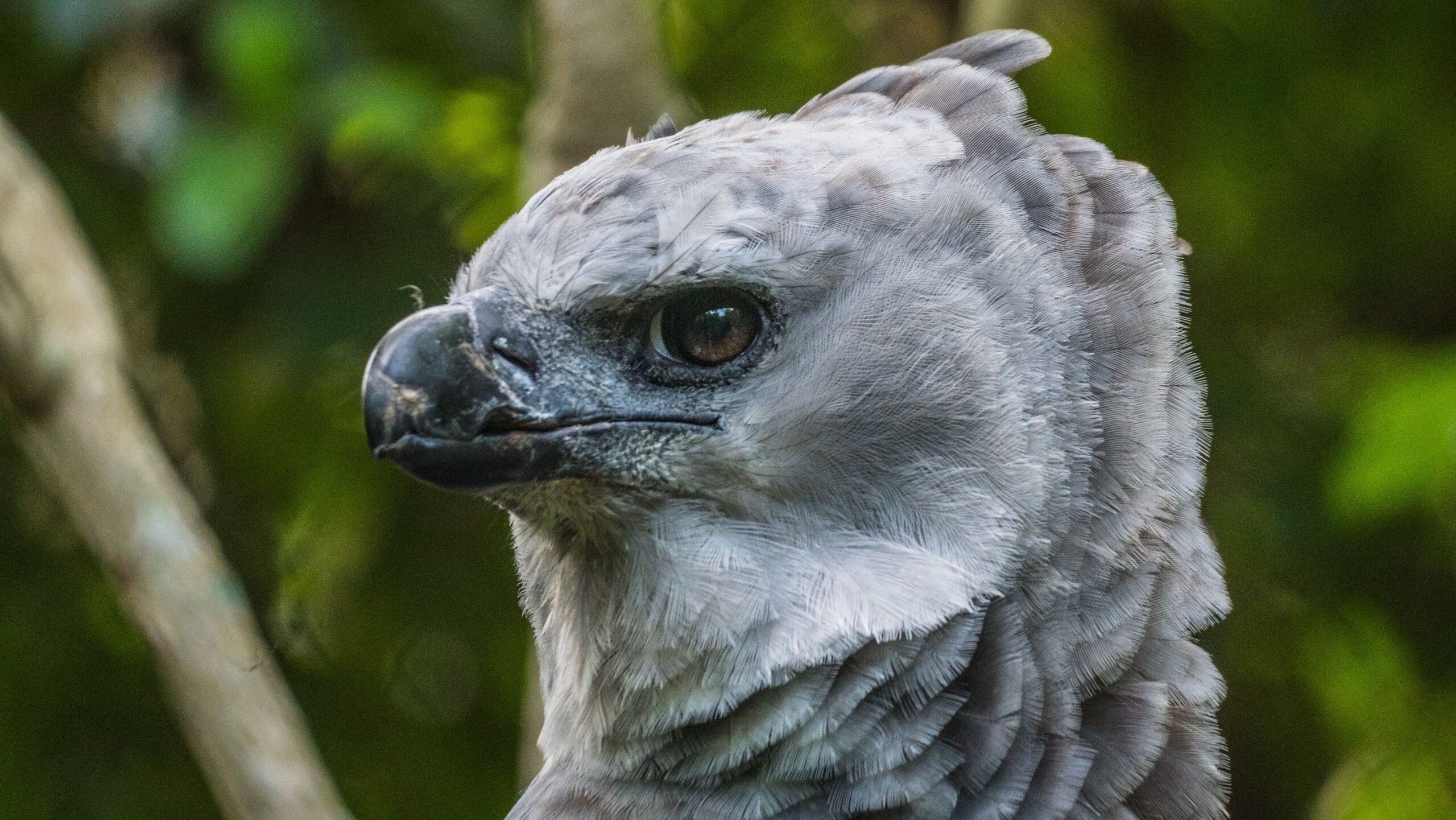
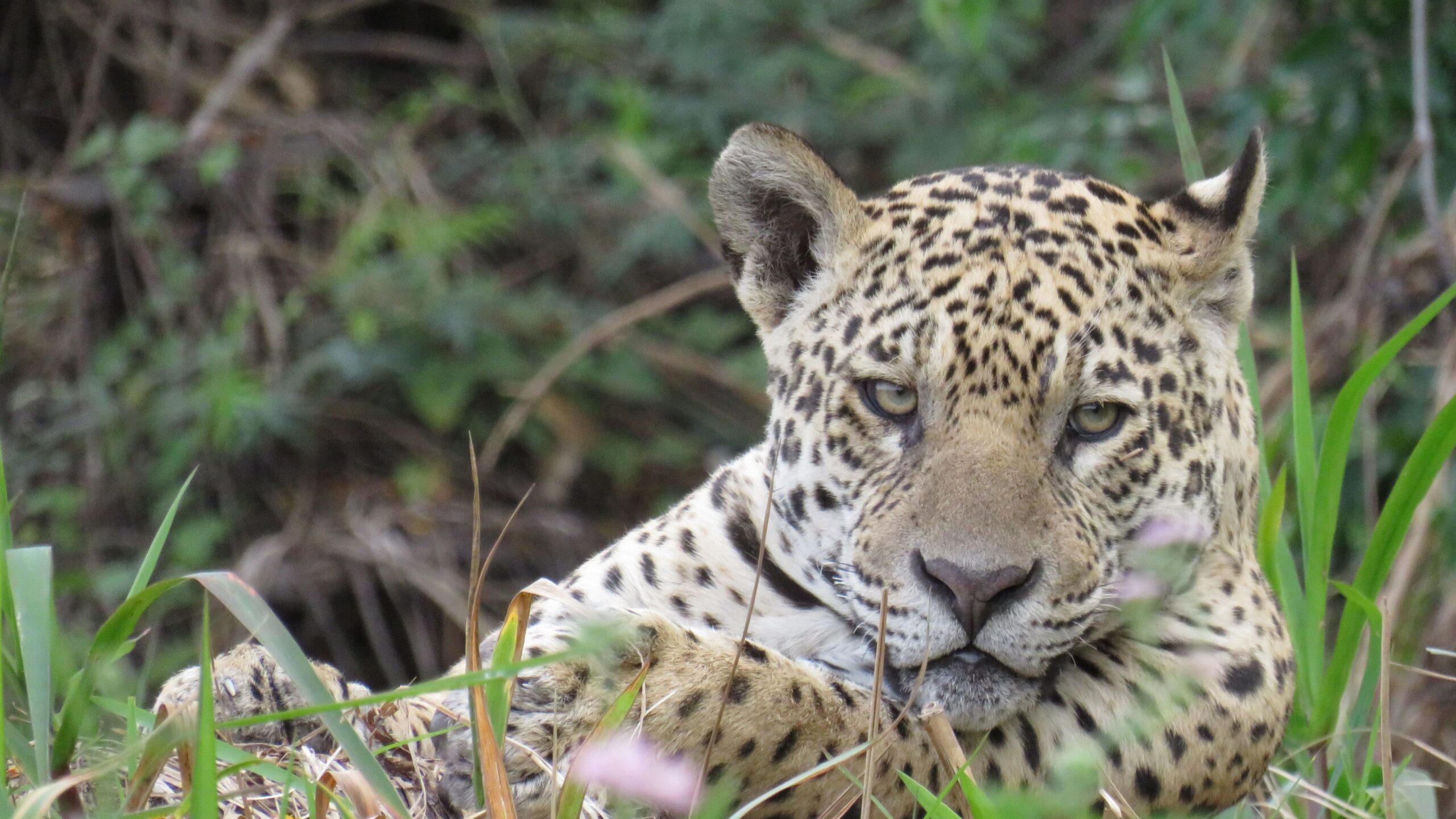
Other Notable Wildlife: Keep your eyes open for apex predators like the Jaguar, Puma, and Harpy Eagle, alongside the Spectacled Bear, the Andean Fox, and the rare Giant Armadillo.
Top Unmissable Experiences in Manu
1. Witness the Three Crosses Sunrise (Tres Cruces)
Located near the folkloric capital of Paucartambo at the Acjanaco control post, this mountain viewpoint offers what many call the most beautiful sunrise in the world. Between May and August, a rare optical illusion occurs where the dawn humidity diffuses the light, making it appear as though three suns are rising over the endless green canopy of the Amazon, with the snow-capped peak of Ausangate visible in the distance.
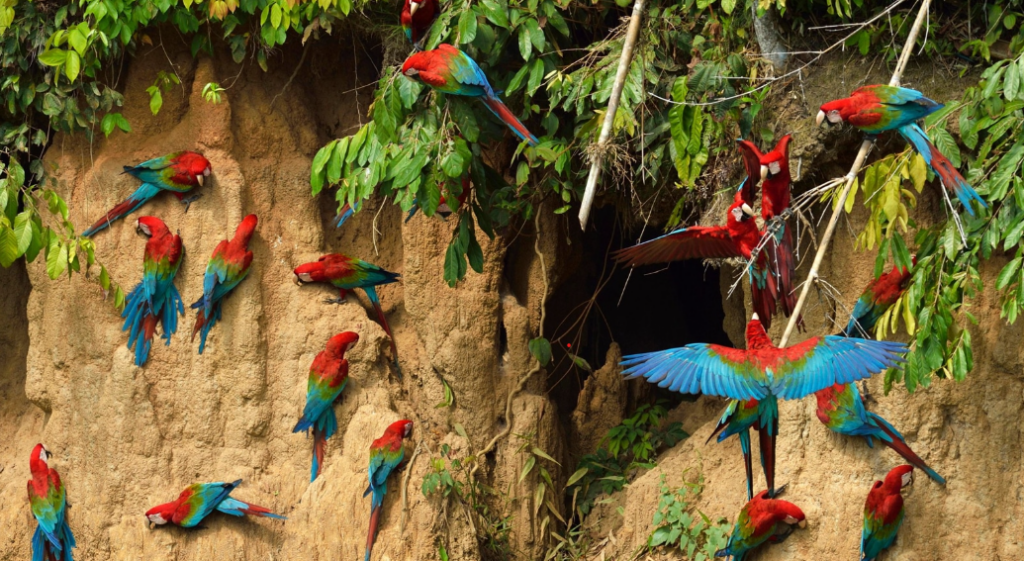
2. Visit a Macaw Clay Lick
An absolute must for birdwatchers and nature lovers. Hundreds of brightly colored macaws and parrots congregate at massive clay cliffs along the riverbanks to feed on mineral-rich salts that help supplement their diets and neutralize toxins.
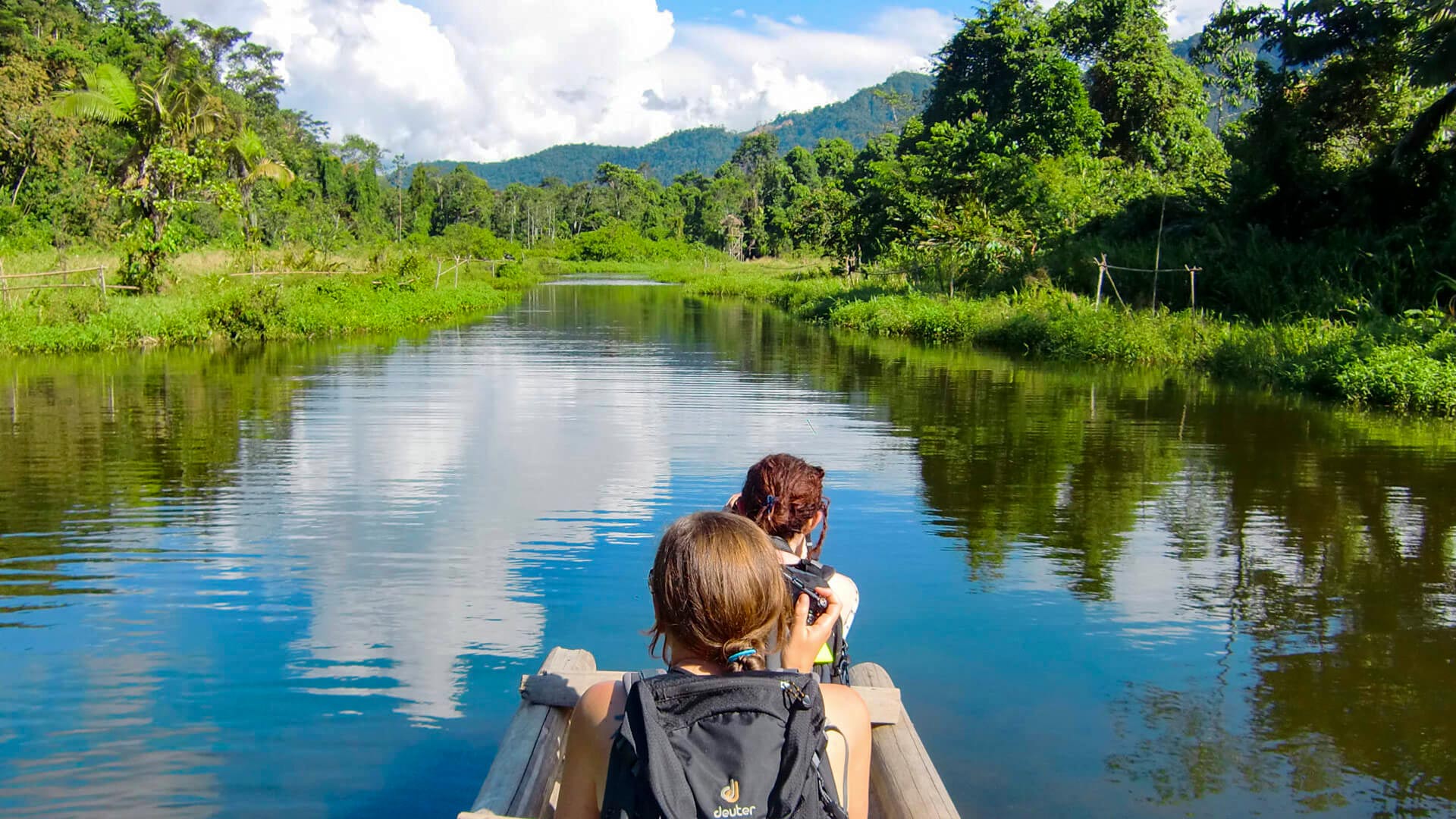
3. Cruise the Oxbow Lakes (Sandoval and Otorongo)
Deep within the Reserved Zone lie pristine oxbow lakes like Lake Sandoval and Lake Otorongo. Navigating these calm waters by boat offers prime viewing for elusive wildlife like black caimans, river turtles, and monkeys. Lake Otorongo features a specially constructed observation tower that allows you to look down on the canopy and shoreline.
4. Treetop Canopy Walkways and Night Walks
To see the jungle from a completely different perspective, step onto a canopy walkway suspended high in the treetops where the vast majority of rainforest wildlife actually lives. Once the sun sets, take a guided night walk to witness an entirely different cast of nocturnal creatures, insects, and amphibians emerge under the cover of darkness.
5. Rafting in the Kosñipata Valley
For adventure seekers, the Kosñipata River offers thrilling white-water rafting opportunities featuring Class 3, 4, and 5 rapids. The valley is also excellent for mountain biking along the steep flanks of the Andes as they drop into the rainforest.
How to Travel to Manu
Reaching this remote paradise requires careful planning. Travelers cannot purchase park entrance tickets independently: access is strictly permitted only through authorized agencies using licensed transport. There are three main routes to enter the region from Cusco or Lima.
Route 1: The Overland and River Expedition from Cusco
This classic, highly scenic route showcases the changing landscapes from the high Andes to the deep jungle.
- By Land: Travel 280 kilometers from Cusco via the Paucartambo highway, a drive of approximately 12 hours, to reach the gateway town of Atalaya.
- By Water: From Atalaya, step into a motorized boat and journey 12 hours down the Madre de Dios River to reach the town of Boca Manu, your primary entry hub for the park.
Route 2: The Charter Flight Shortcut
- For a faster journey, travelers can charter a private light aircraft from the city of Cusco directly to the local airstrip at Boca Manu. This flight takes just 30 minutes, bypassing the long overland drive.
Route 3: The Puerto Maldonado Gateway
- Take a commercial flight from Lima (1 hour 40 minutes) or Cusco (1 hour) to the major Amazonian commercial hub of Puerto Maldonado. From this bustling jungle town, you can comfortably access the depths of the Manu River basin by boat.
Weather and Seasonal Planning
Because the park rests mostly within the Amazon Basin, you can always expect a fair amount of rain. However, the year is divided into two very distinct seasons that drastically affect travel logistics.
The Dry Season (May to October)
- Daytime Temperatures: Average around 35 to 36 degrees Celsius (95 to 97 degrees Fahrenheit)
- Nighttime Temperatures: Drop to around 18 to 25 degrees Celsius (64 to 77 degrees Fahrenheit)
- What to Expect: This is undoubtedly the recommended time to visit. While brief rain showers still occur, the trails are clearer and wildlife viewing around riverbeds is at its peak. Humidity levels consistently exceed 70 percent.
The Rainy Season (December to March)
- What to Expect: Expect heavy, tropical downpours almost every single day. The rain brings a cool, welcome relief from the intense jungle heat, but it makes travel much more challenging.
Important Travel Notice: During the peak of the rainy season, tours are regularly canceled or rescheduled. Heavy rainfall frequently causes sudden mudslides along the steep Andean highways and causes river levels to rise dangerously, making access to certain regions of the park highly difficult or entirely blocked.
Essential Jungle Packing Tip
The Amazon rainforest is home to a massive population of mosquitoes. Regardless of the season, it is highly recommended to pack heavy-duty insect repellent and wear lightweight, long-sleeved shirts and full-length trousers to protect your skin from bites while exploring or resting in your eco-friendly jungle lodge.